Sustainable Travel Malta: Exploring The Mediterranean Responsibly
Discover Malta Through Slow Travel, Local Culture, Sustainable Adventures, and Responsible Tourism Across the Mediterranean Islands
Malta’s greatest gift to travellers is not simply its history, coastline or sunshine: it’s the opportunity to slow down, to walk instead of rush and to paddle instead of motor. To support local businesses and experience the islands through the people who call them home.
Author: Olivia Walker
Sustainable Travel Malta is about more than visiting an island destination; it is about experiencing the Mediterranean in a slower, more conscious and meaningful way.
As an Australian living abroad, I feel incredibly fortunate to have explored much of Europe, Scandinavia and the Mediterranean.
I’m also working towards a personal goal: visiting 30 countries before I turn 30. Malta became country number 29 on that journey, but what surprised me most wasn’t just the crystal-clear water or ancient history — it was the effortless lifestyle that welcomes you the moment you arrive, giving a whole body sense of relaxation as soon as your feet hit the ground. There was a calming aurora of Malta that subtly encouraged me to relax and travel slowly and intentionally.

In a world where overtourism is placing increasing pressure on many Mediterranean destinations, Malta offers something refreshing. Its compact size, walkable cities, public transport, and strong local identity make it possible to experience the islands in a more conscious and sustainable way.
Whether you’re wandering the historic streets of Valletta, taking a ferry to Gozo, or paddling a kayak through the turquoise waters of the Blue Lagoon, Malta rewards travellers who slow down and engage with the destination rather than simply ticking off attractions.
This guide shares some of my favourite experiences, alongside practical tips for exploring Malta responsibly.
Getting There: Small Changes, Big Impact
Being an island nation, Malta is most commonly reached by air, although ferries also connect the islands to Sicily and cruise ships from mainland Europe.
My own trip began with a direct flight from London. While air travel inevitably carries an environmental cost, there are simple ways to reduce your impact before you’ve even arrived.
Whenever possible, choose direct flights rather than routes with multiple stopovers. Take-offs and landings generate the highest proportion of aviation emissions, so fewer flight segments generally mean a lower carbon footprint.
Packing light also makes a difference. For a long weekend in Malta, a carry-on bag is often more than enough. Less weight means less fuel consumption, and every small decision contributes to a more efficient journey.
Another tip? Stay longer if you can. A single week-long trip often has a lower environmental impact than several shorter getaways throughout the year.
But sustainable travel doesn’t require perfection. It starts with thoughtful choices.
If you want more tips and tricks on sustainable travel, follow my YouTube channel where I create bespoke eco-travel content and unpack ways to travel more sustainably.
Why Malta is Perfect for Slow Travel
One of Malta’s greatest sustainability advantages is its size. Unlike many European destinations where visitors rely heavily on rental cars or domestic flights, much of Malta can be explored on foot, by ferry or through the island’s extensive bus network.
Valletta, the country’s capital, is a particularly walkable city. Its narrow streets, historic squares and waterfront promenades are best experienced slowly, allowing time to appreciate details that would otherwise be missed from behind a car window.
I often enjoy looking up to the balconies and windows of the buildings we pass, noticing the interesting architecture. It is often things that are hiding in plain sight that I enjoy experiencing the most.
The friendly faces you pass, the clinking of ice in a glass, all paint a picture of quiet enjoyment where you can simply take in the moment.
Public ferries connect Valletta with Sliema and the Three Cities, offering a scenic and affordable alternative to taxis. This is not only convenient but affordable. May 2026 pricing is 3 euros for a one- way ticket, or 5 euros for the return. This means you can be based in Sliema and still have easy access to the main town. Buses reach most major attractions across Malta and Gozo, while many coastal walks can be accessed without a car altogether.
One of my favourite activities is walking along the coast, hugging the shoreline.
Travelling at a slower pace not only reduces your environmental impact but often leads to richer experiences and discoveries of ‘unknown’ places. Some of the most memorable moments from Malta weren’t major landmarks at all — they were quiet moments spent watching fishing boats, chatting with local bar owners, and finding hidden viewpoints while walking between planned destinations.
Where History Meets the Sea
Beyond the postcard beaches and famous landmarks lies a destination shaped by thousands of years of history, maritime culture and Mediterranean life. Honey-coloured cities sit above hidden coves, colourful fishing boats drift across turquoise harbours, and ancient fortifications trace the coastline like reminders of another age.
Located at the centre of the Mediterranean Sea, Malta has long served as a crossroads between Europe, North Africa and the Middle East. Phoenicians, Romans, Arabs, Normans, the Knights of St John, the French and the British have all left their mark on these islands. The result is a fascinating blend of cultures that can be seen everywhere; from the Maltese language and cuisine to the architecture lining Valletta’s streets.


Walking through the capital feels like stepping into a living museum. Yet unlike many historic European cities, Valletta never feels disconnected from modern life. Locals gather in sunlit squares, ferries weave through the harbour, and cafés spill onto streets that have witnessed centuries of history.
Whether you are a history-buff or adventurer, this island nation has something to offer.
The best way to experience it in my opinion? Put away the map and explore on foot.
The Mediterranean Sea
The Mediterranean isn’t simply a backdrop to Malta, it is the reason Malta exists as it does today.
Stretching across three continents, the Mediterranean has connected cultures, trade routes and civilisations for thousands of years. Ancient merchants crossed these waters long before modern borders existed, carrying ideas, foods and traditions that continue to influence the region today.
One of the Mediterranean sea’s most fascinating characteristics is its colour. The endless sunshine hits the water, refracting rays of sunlight that glitter across the waves like a timeless dance only mother nature knows the moves to.
The incredible clarity and vivid blues surrounding Malta are created by a combination of strong sunlight, pale limestone seabeds and exceptionally clear water.
In many locations, the water visibility extends for dozens of metres below the surface — straight to the seabed. The strong sunlight hits the sea floor directly, bending the light back through the water enhancing the picturesque blue colours.
The Mediterranean is also one of the world’s saltiest seas, containing significantly more salt than the Atlantic Ocean. This contributes to its famous buoyancy, making swimming feel almost effortless. When floating or kayaking over the top, the incredible clarity means you can even see your shadow on the sea floor!
Despite its popularity with tourists, the Mediterranean supports remarkable biodiversity. Sea turtles, dolphins and hundreds of fish species inhabit these waters, making marine conservation increasingly important as visitor numbers continue to grow.
As travellers, protecting these ecosystems begins with simple choices: avoiding litter, using reef-safe sunscreen, and respecting marine habitats while swimming, snorkelling or kayaking.
Gozo Island
If the island of Malta feels energetic and vibrant, Gozo feels restorative.
A short ferry ride north of the mainland, Gozo offers a quieter and more relaxed side of island life. The pace slows noticeably. Roads become calmer, villages feel more intimate, and rolling countryside replaces urban development.
For conscious travellers, Gozo represents everything that slow travel should be.


The long weekend timeframe meant I was only fortunate enough to visit Gozo for a day trip but if your schedule allows it, I encourage you to consider staying in Gozo overnight. Spending a few days on the island allows you to support local accommodation providers, eat in family- owned restaurants, and experience Gozo after the day- trippers have returned to Malta — which is often when wildlife comes out!
What struck me most wasn’t the view itself, it was the atmosphere. Life here feels community-oriented rather than tourist-focused.
Gozo rewards those willing to wander. Hondoq Bay provided the perfect place to take in the gorgeous surrounds and explore without an agenda.
This isn’t an island designed for rushing. It’s an island designed for noticing.
An Eco-Friendly Option for the Blue Lagoon
No experience captured Malta’s relationship with the sea quite like kayaking around Comino and the Blue Lagoon. And like most people, I wanted to see the place highlighted on social media that seemed almost too good to be true (or, in the age of AI, too perfect to be real).
I am delighted to report that places like the Blue Lagoon do in fact exist and they are even more spectacular in person than on screen.
Situated between Comino and Cominotto, the Blue Lagoon is one of Malta’s most photographed destinations, and despite seeing countless images beforehand, the colours still felt impossible in person. Electric turquoise water stretches across brilliant white limestone, creating one of the most beautiful coastal landscapes in the Mediterranean. I couldn’t help but skim my hands across the top of the water to check it was real.

Many visitors arrive by boat; some, packed catamarans hosting bachelorette parties, and others, larger commuter boats which only stay for a brief drop off. But kayaking offers a completely different perspective. The journey becomes part of the experience. Hidden caves emerge from the cliffs, while quiet coves reveal themselves around inconspicuous bends in the rocky headlands. Here, the noise of engines gives way to the gentle rhythm of paddles cutting through crystal-clear water.
Perhaps most importantly, kayaking encourages a more responsible form of travel.
Unlike larger motorised excursions, kayaks create no emissions on the water, generate no engine noise and allow visitors to experience the coastline with minimal disturbance to marine life. They also provide the freedom to move beyond the busiest areas and discover quieter corners of Comino that many visitors never see.
If you visit, bring a reusable water bottle, avoid leaving any waste behind, and consider arriving early in the morning before the largest tour groups arrive. You’ll enjoy a more peaceful experience while helping reduce pressure on one of Malta’s most visited natural attractions.
For me, it was easily the highlight of the trip.
Sustainable Food Tastes Better
One of the simplest ways to travel more sustainably is to eat locally. Fortunately, Malta makes this easy.
Across the islands, village markets, family-owned restaurants and independent cafés showcase seasonal produce and traditional recipes that have been passed down through generations.
Fresh seafood features prominently, alongside rustic breads, olives, capers, local cheeses and vegetables grown in Malta’s countryside.
Whenever possible, I try to seek out smaller locally-owned businesses rather than international chains. Not only does this reduce the distance food travels, but it also helps support the communities that make a destination unique.
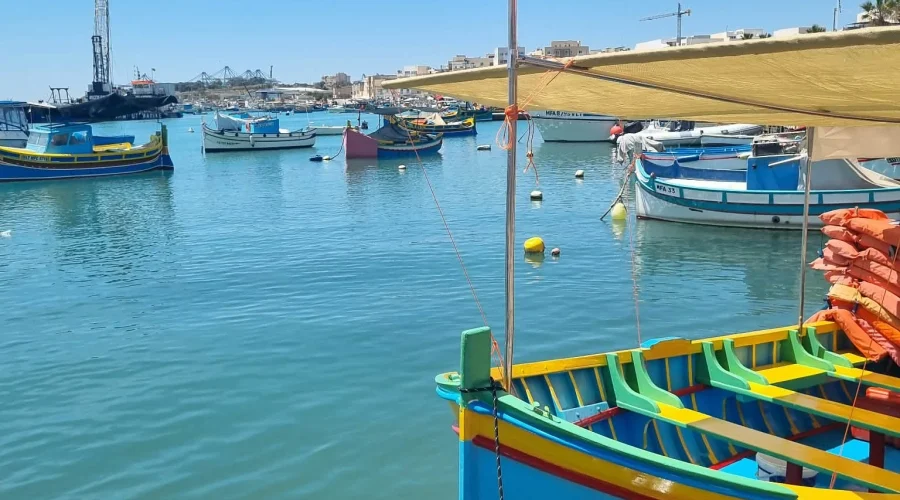
We travelled to Marsaxlokk, a fishing village to the south-east of Valetta. The star attraction is the fish market itself. Open from 8:30am to 10:00am each Sunday, you can come and find the freshest seafood on offer in the Mediterranean, straight from the source. Beyond the seafood, waterfront markets offer a mix of fresh seasonal produce, olive oil, handicrafts, clothing and souvenirs. It is also the perfect opportunity to capture the vibrant colours of Luzzu boats against the gorgeous blue waters.

Wherever I travel, I like to engage in “cultural eating“. It essentially involves trying a local dish from the town, region or country — this ranges from trying escargot in France, to sampling locally produced wine in Chianti, Italy. In Malta, the cultural delicacy you may not have heard of is rabbit. Versatile in stews, pies, or simply with some potato fries, you can try traditional Maltese rabbit dishes in most restaurants.
That being said, some of my favourite meals in Malta weren’t elaborate restaurant experiences. They were simple lunches overlooking the sea and homecooked-style dinners with friends.
Travel Tips for Exploring Malta Responsibly
A few simple choices can make a meaningful difference:
— Walk whenever possible, particularly in Valletta and historic town centres
— Use ferries and public buses instead of taxis or rental cars
— Stay overnight in Gozo rather than treating it as a quick day trip
— Carry a reusable water bottle (Malta is hot and you’ll thank me later!)
— Choose locally owned accommodation and restaurants
— Visit popular attractions early or late to reduce overcrowding
— Respect marine ecosystems when swimming, snorkelling and kayaking
— Pack light and prioritise direct flights where possible
None of these choices require sacrificing comfort or enjoyment. In fact, many of them lead to a richer travel experience.
In an era when many destinations are grappling with the challenges of overtourism, Malta offers a reminder that meaningful travel often comes from doing less, not more.
Explore thoughtfully, tread lightly and stay curious.