
Budapest: Where East Meets West and Dreams Meet Reality
A Personal Summer Journey — From Quiet Mornings Along the Danube to Thermal Baths, Unexpected Encounters And More Sustainable Ways to Experience The City
Budapest is a city of contrasts — where East meets West, old meets new, dreams meet reality, and quiet moments meet the energy of the city. It is a magnificent and romantic place where expected encounters may never happen, while unexpected ones can leave memories that last forever. This personal review follows a summer journey through Budapest, from the Danube and its evening lights to local spots, Buda Castle, thermal baths and the people who became part of the journey, while discovering simple and more sustainable ways to experience the city.
Budapest becomes a story about connection and disconnection, contrasts, expectations and reality — and about saying our “hellos” to strangers and our “goodbyes” to familiar people.
Author: Gergana Marinova
What makes us travel? Sometimes, it is the need to rest. Sometimes, it is the need to escape the routine of everyday life. And sometimes, it is simply the desire to meet a friend in a place that neither of you has ever been to before — somewhere that can become your place.
You want it to be special, but not pretentious; interesting, but not exhausting. You want to discover something new without spending weeks planning every little detail. And when you travel in the middle of summer, another question comes up: where can you go in Europe when most places are simply too hot?
The options are endless. Europe has beautiful coastal destinations, magnificent cities and countless places worth discovering. But sometimes the best choice is not the most obvious one. Sometimes you need a destination that is impressive enough to feel like an adventure, yet accessible enough to make the journey simple.
For me, that place turned out to be Budapest.
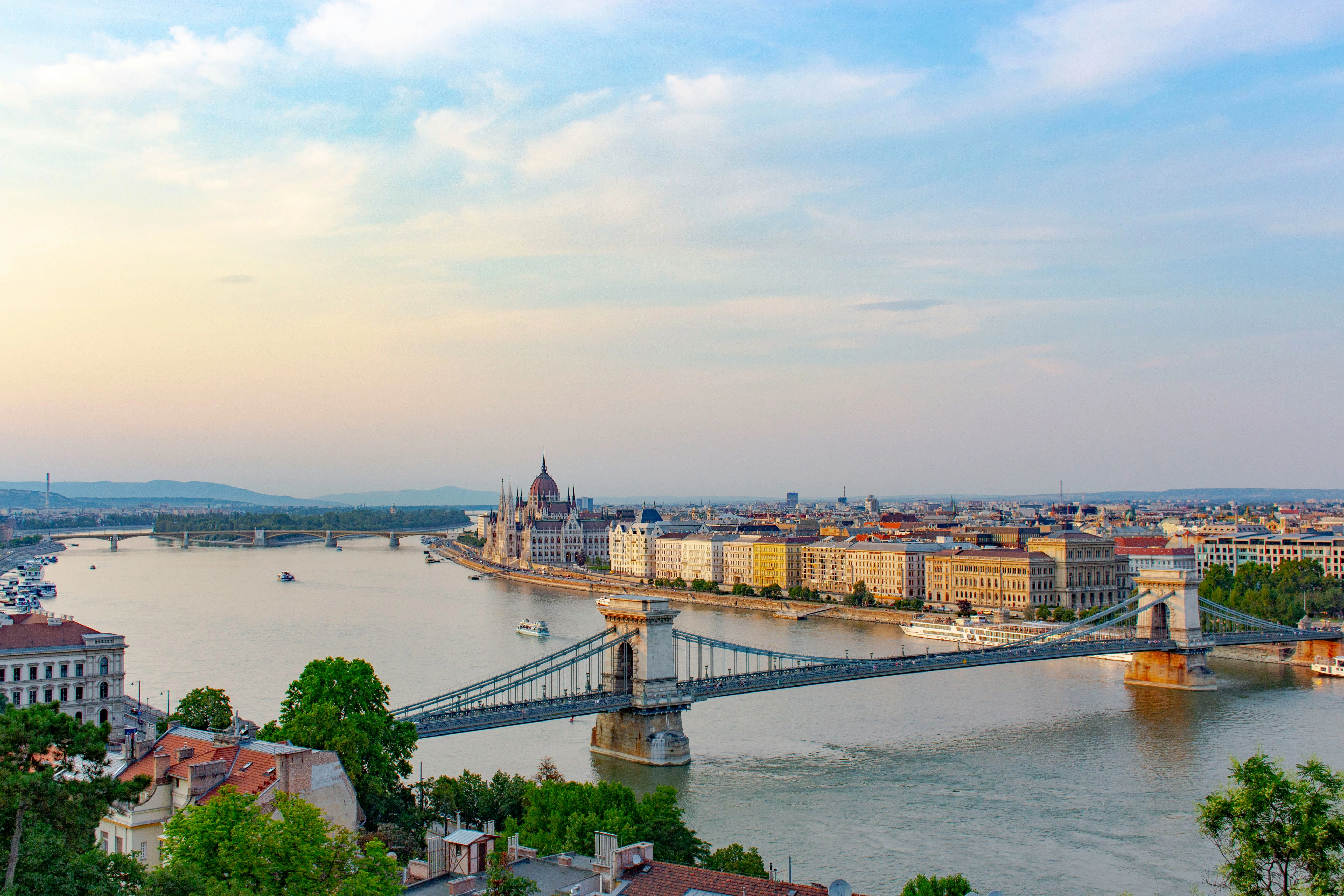
Budapest is one of those cities that feels surprisingly central to Europe — both geographically and culturally. It is well connected to many European destinations, with frequent flights and easy connections by train and road. It felt like a destination that could be planned without allowing the planning itself to take away from the excitement of travelling.
A City Between Two Worlds
And there is something else that makes this city particularly appealing in summer. The city is alive. There are young people everywhere, bars, restaurants, music, tourists, people sitting along the Danube, boats passing by and groups gathering in the evening. Yet somehow, the city never feels as if it is forcing you to participate.
The river runs through it like a living thread. The Danube separates Buda and Pest, but it is also what brings the two sides of the city together. The river gives Budapest not only some of its most beautiful views, but also a sense of space and openness. There is something naturally calming about being close to water. You can walk beside it, watch the boats pass, feel the breeze and simply slow down.
From the river, many of Budapest’s most recognisable landmarks are within easy reach. The Hungarian Parliament, St. Stephen’s Basilica, the Chain Bridge and the Buda Castle District are all part of the city’s central landscape, and walking between them is one of the easiest ways to get a feeling for Budapest.
Historically, Budapest was not always one city. Buda, Pest and Óbuda developed separately before they were united in 1873. The Danube naturally separated the two main sides of the city, but over time, its bridges turned that divide into a connection. The Chain Bridge, opened in 1849, was the first permanent bridge linking Buda and Pest and became an important symbol of the city’s transformation and modernization.
Today, that history is still visible everywhere.
And perhaps that is one of the first things that struck me about Budapest: it is a city where the old and the new have not had to fight for space. They simply live together.
Familiar, Yet Completely New
Walking through the city for the first time, I kept getting this strange feeling that parts of the city looked somehow familiar. Certain streets and little corners reminded me so much of Ghent (Belgium). And then, just when the city started to feel familiar, something completely different would appear.
There are traces of Central and Eastern European history everywhere — from small souvenir shops and traditional crafts to the atmosphere of certain streets and neighbourhoods. You can still find matryoshka dolls and objects with an unmistakably Eastern European character, while only a few streets away the architecture, cafés and lifestyle feel Western European and contemporary.
Budapest somehow combines these influences without trying to hide either of them.
The city has lived through Ottoman rule, the Habsburg period and the Austro-Hungarian era, and its architecture still carries traces of these different chapters. The result is not a perfectly uniform city. It is something much more interesting: layers of history that have remained visible while the city continued to evolve.
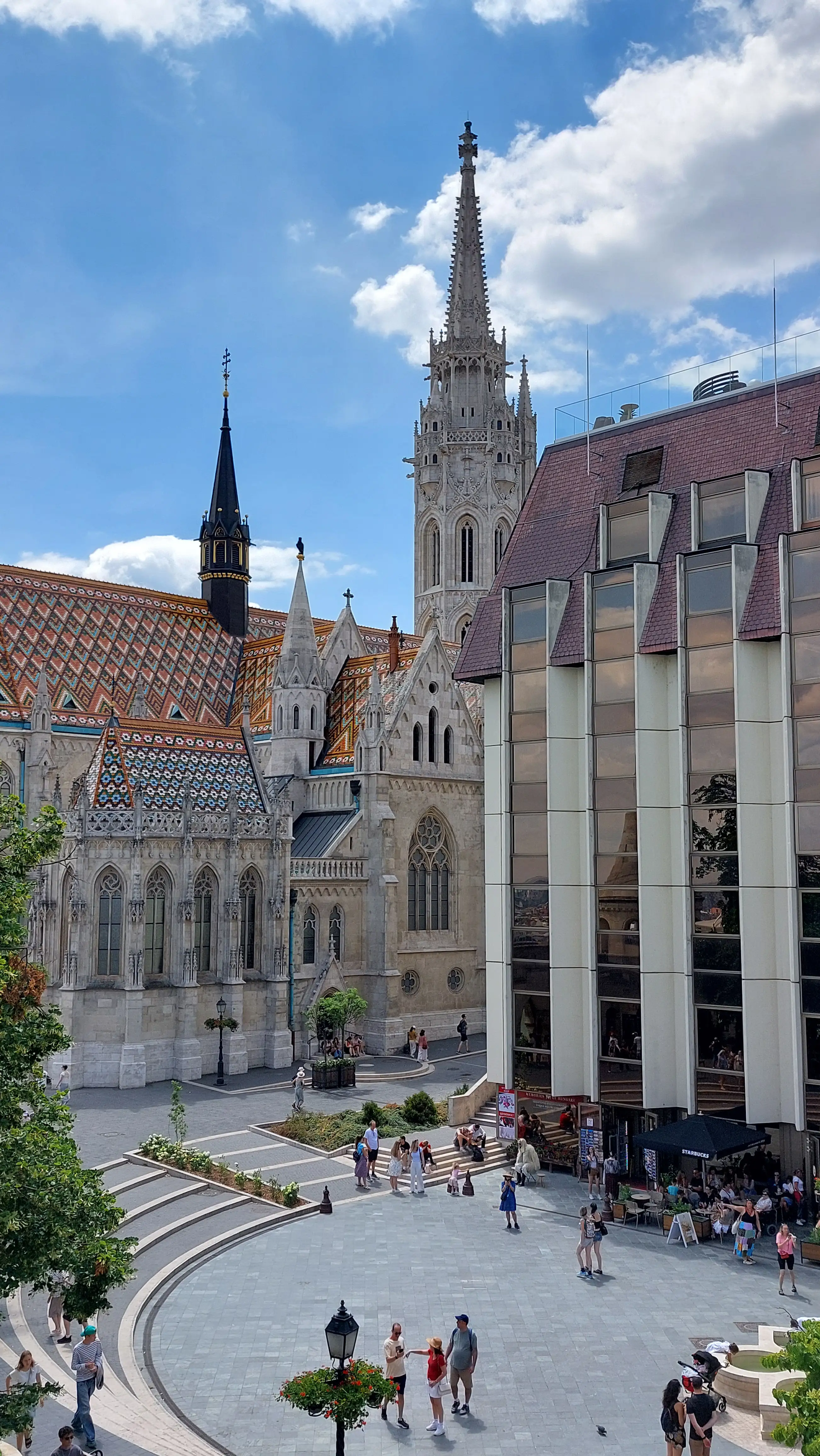

Perhaps this is why Budapest feels so different from many other European capitals. You can clearly see the boundaries between different worlds, yet they seem to overlap.
East and West.
Old and new.
Tradition and modern life.
An Unexpected Welcome to Budapest
On my first morning, before the city had fully woken up, I went for an early walk along the river. It was somewhere between 8 and 9 a.m., and I was simply looking for a place to have something to eat.
As I was crossing one of the bridges over the Danube, something unexpected happened. A helicopter appeared above the river, carrying a Ukrainian flag that was flying beneath it. It made several circles over the river and around the bridge, passing above me as I walked across. The sight of the helicopter carrying the Ukrainian flag over the Danube was strangely emotional — it almost felt like a warm welcome.
Then three fighter jets appeared. They flew over the river leaving trails of smoke in the colours of the Hungarian flag. I stood there watching, completely caught off guard by the whole scene. I had started the morning simply looking for breakfast, and suddenly I was standing on a bridge watching something I had never expected to see.
I asked a local whether this happened every morning. He smiled and said no. I still don’t know exactly what the occasion was, but perhaps that was part of the magic of the moment. It was unexpected, completely unplanned and impossible to recreate.
What the City Looks Like Before the Day Begins
If you want to experience a quieter side of Budapest, I would recommend getting out relatively early. Between 8 and 10 in the morning, the city feels completely different. It is not empty — there are people, cafés are open and life is already beginning — but the streets are noticeably calmer. After the energy of the previous evening, there is a sense that the city is only slowly waking up.
Take your time to feel the atmosphere, get a little closer to the city, have a healthy brunch and take some time to properly plan the rest of your day. This is what I did.
Budapest also surprised me with the number of brunch places. There seemed to be cafés and brunch spots everywhere, often quite close to one another, and the food was very tasty.
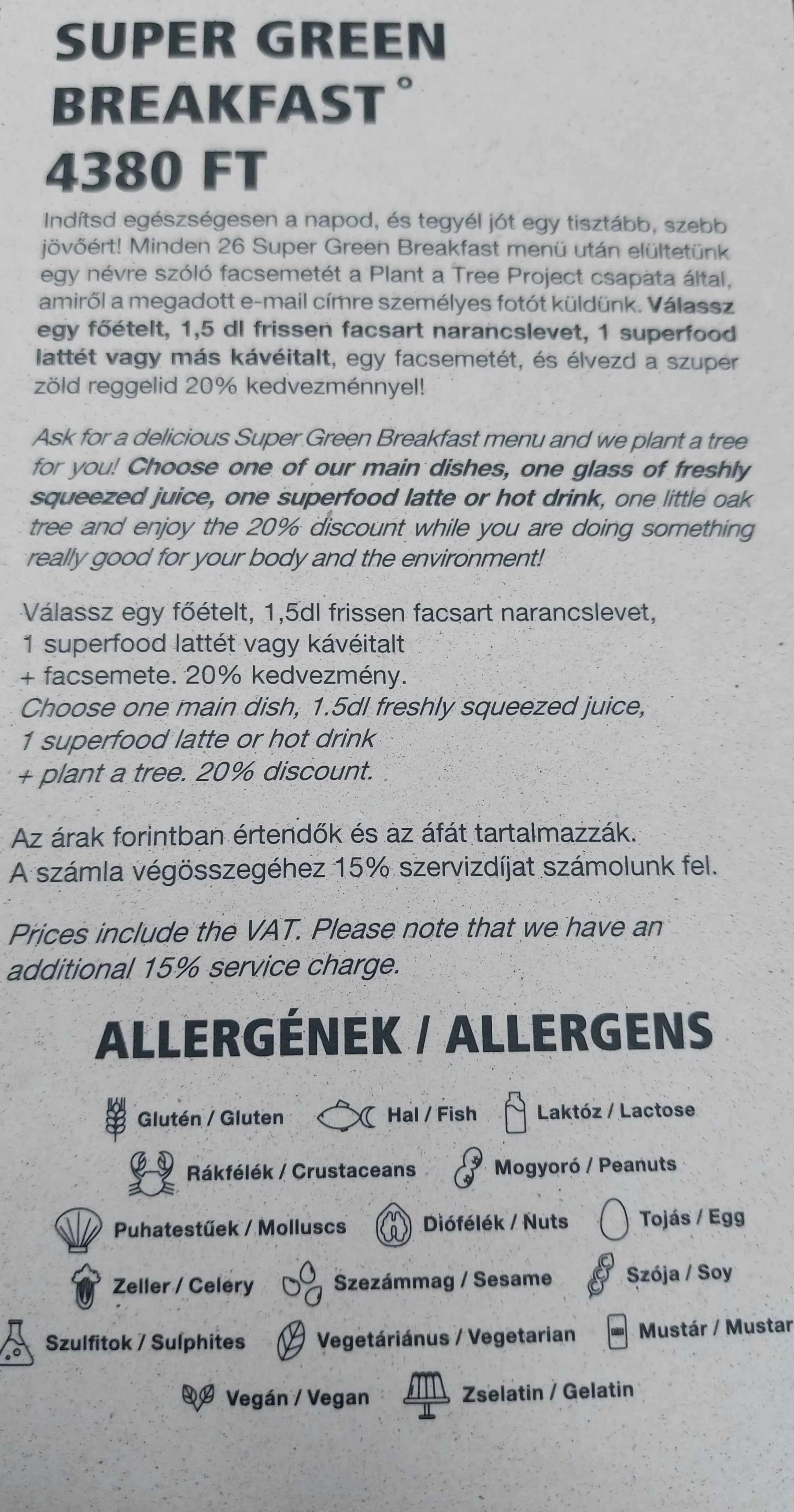
One place that particularly caught my attention was Twentysix, a green urban oasis in the heart of the city. They offer a special Super Green Breakfast, where part of the experience goes beyond the meal: with the breakfast, a tree is planted in your name through the Plant A Tree Project. You receive a photo of your tree, making your breakfast feel like something that stays with you even after you leave Budapest.


If you are looking for somewhere to eat or have brunch, there are also a few places in the city that offer a more conscious approach to food. The Planteen is a fully plant-based café and canteen, while TATI focuses on seasonal ingredients and local producers. Marumba offers vegetarian and plant-based options as well as brunch, and Tökmag is a more casual choice for vegan street food.
These are not the kinds of places you necessarily plan your whole day around. They are simply good options to keep in mind when you want to eat somewhere that gives a little more thought to what is on the plate, how it is sourced and how it is prepared.
And, of course, there is one Hungarian treat that is difficult to miss: kürtőskalács, the chimney cake. You will see it being prepared in different places, often served with chocolate, ice cream, toppings or other additions. It is one of those simple local foods that quickly becomes part of the memory of a trip.
What I Loved About The People
One of the first things I noticed in Budapest was how welcoming people were. They seemed to genuinely care about whether you felt comfortable and whether you were able to experience the city in your own way, rather than simply following a set of rules.
I noticed this in several small situations. At one restaurant, I ordered pasta but found the tomato sauce too strong for my taste. When I mentioned it, the manager came over herself and said she would try it to see if I was right. And she actually did. I was honestly surprised. She agreed that the sauce was quite strong and immediately offered to let me choose something else.
From what I experienced, Hungarians truly want you to have a good experience — in your own way, at your own pace, and according to what makes you comfortable.
Exploring the City at Your Own Pace
And Budapest itself seemed to have the same quality. It is a large, lively and very touristy city, particularly during summer. There are plenty of visitors, especially along the Danube and around the main landmarks. Yet you can walk only a few minutes away from the busiest areas and suddenly find yourself sitting on a bench beside the river with almost no one around you.
Along the Danube, you will also come across one of Budapest’s most poignant memorials: the Shoes on the Danube Bank. The 60 pairs of iron shoes represent Jewish people who were forced to remove their shoes before being shot along the riverbank during the Second World War. Today, the memorial stands quietly beside the river, creating a striking contrast with the lively atmosphere around it.

One moment there is music, dancing and laughter. The next, there is simply the river. That contrast became one of my favourite things about Budapest.
In the evening, people gather along the Danube. Music comes from the riverfront, groups of friends meet, people dance, talk and enjoy the summer. But only a few steps away, you can sit quietly, watch the boats go past and look at the lights reflected in the water. Budapest can be crowded without making you feel crowded. It is a city where you can be alone without feeling lonely.
Getting Around Budapest, More Sustainably
Another thing that makes this city easy to experience is its walkability. Many of the major sights are close enough to one another that you can spend hours exploring without constantly needing to switch between different forms of transport. You can walk from one landmark to another, stop for coffee, sit on a bench, enter a small shop or simply change direction because something catches your eye.
For me, this is one of the simplest ways to travel more sustainably: sometimes, the best way to discover a city is simply to walk through it. And Budapest makes that easy. The city is also remarkably comfortable for a slow day. You do not necessarily need a strict itinerary. You can start in the morning with a coffee and a brunch, explore for a few hours, slow down beside the Danube in the afternoon and then let the city change around you as evening arrives.
And if you have arrived by plane, there is another small step you can take to make your journey more conscious: calculate the emissions from your flight and offset your travel footprint with our Offset Calculator.
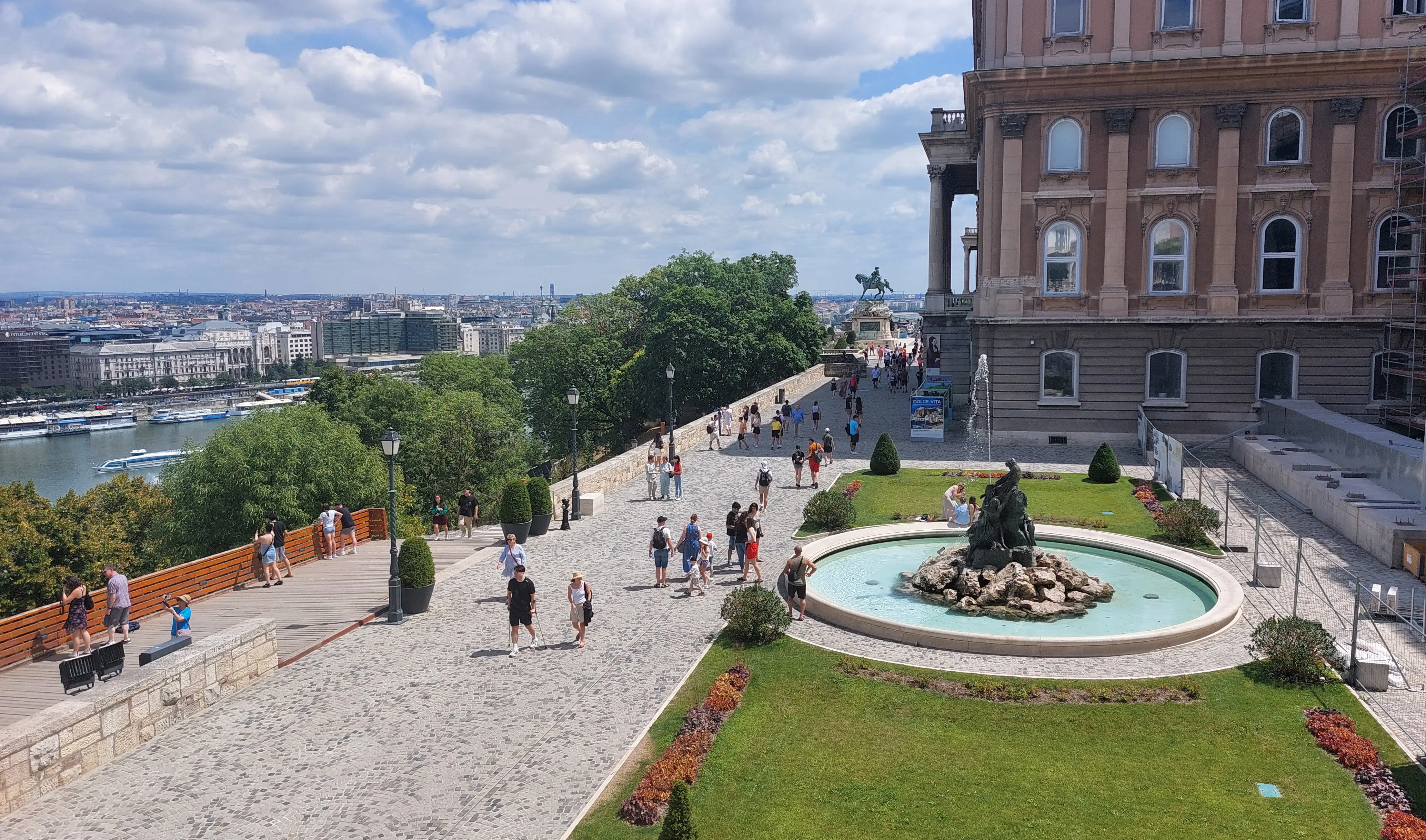
If you are visiting the Buda Castle District in summer, especially on a hot day, there is a very practical way to explore the area without having to walk up and down the hill all the time: the official Budapest Castle Bus.
These open-air electric minibuses run through the historic Castle District and stop near some of its main sights, including Matthias Church and Fisherman’s Bastion, Buda Tower, Buda Castle and Castle Garden Bazaar. The service allows you to get off, explore for a while, and hop back on later using the same ticket. The buses generally run about every 10 minutes, with the service operating according to the season. When I visited on July 10, the service was running from around 9 a.m. to 5 p.m.
I found it particularly useful because it made exploring the Castle District much easier in the summer heat. The buses are open, so you still get to enjoy the views and the fresh air while moving between the different parts of the hill. There are also cafés, toilets and places to sit near the main stops, which makes it easy to take your time rather than trying to see everything in one go.
For me, this was also a nice reminder that travelling more sustainably does not always have to mean choosing the most physically demanding option. Sometimes a lower-impact form of transport can make the experience both easier and more enjoyable, while still allowing you to explore the place at your own pace.
When I visited, a return ticket cost 6,500 HUF. Since prices and operating hours can change depending on the season, it is worth checking the current information before you go.
The City of Thermal Baths
There is another experience that feels almost inseparable from Budapest: its thermal baths.
The city’s relationship with thermal water goes back centuries. The Romans were already using the thermal springs here, while the Ottoman period added another important layer to Budapest’s bathing culture. Later, the development of grand bathhouses helped make thermal bathing an important part of the city’s identity. Today, Budapest is famous for its many thermal springs and historic bathing culture.
For me, the experience was about taking a few hours to slow down and simply enjoy the thermal baths. You can spend your time moving between the thermal pools, indoor and outdoor pools, saunas and relaxation areas. There are different types of tickets and packages, from basic access to more private and luxurious experiences.
I had a more elaborate package at Széchenyi Thermal Bath, which included a private room and a massage, as well as access to private indoor pools reserved for guests with this type of ticket. The room itself had air conditioning, a private bathroom and a small fridge with water, juice and a light snack. Towels, a robe and a new pair of slippers were also provided.

I liked having a private space to return to whenever I needed a break from the pools. You could cool down in the room, take a shower in your private bathroom or simply rest for a while before going back to the baths. It made the whole experience feel much more relaxed and personal, rather than spending the entire time in the shared areas.
You can arrive, spend time in the pools, move to the sauna, have your massage and then return to the water. After days of walking around Budapest, it felt like a completely different way of experiencing the place.
As Evening Falls, the Usual Sightseeing Gives Way to Romance and Magic
After 7 p.m. in summer, the area around the Danube in the heart of Budapest begins to change. Walking along the river between the Hungarian Parliament, the Chain Bridge and the Buda side, the same places that felt like part of a daytime sightseeing tour suddenly take on a completely different atmosphere. The river is still there, the boats are still passing and people are still walking along the promenade, but the feeling is no longer quite the same.
And then, around 9 in the evening, Budapest becomes something else entirely.
The lights come on across the river. The Parliament glows against the dark sky, the bridges light up, and the buildings on the Buda side begin to reflect in the water. From the riverfront, you can see the Buda Castle district rising above the Danube, while the lights of the city stretch along both sides of the river. A place that only a few hours earlier felt like a destination to explore suddenly becomes somewhere to simply stay and look at.
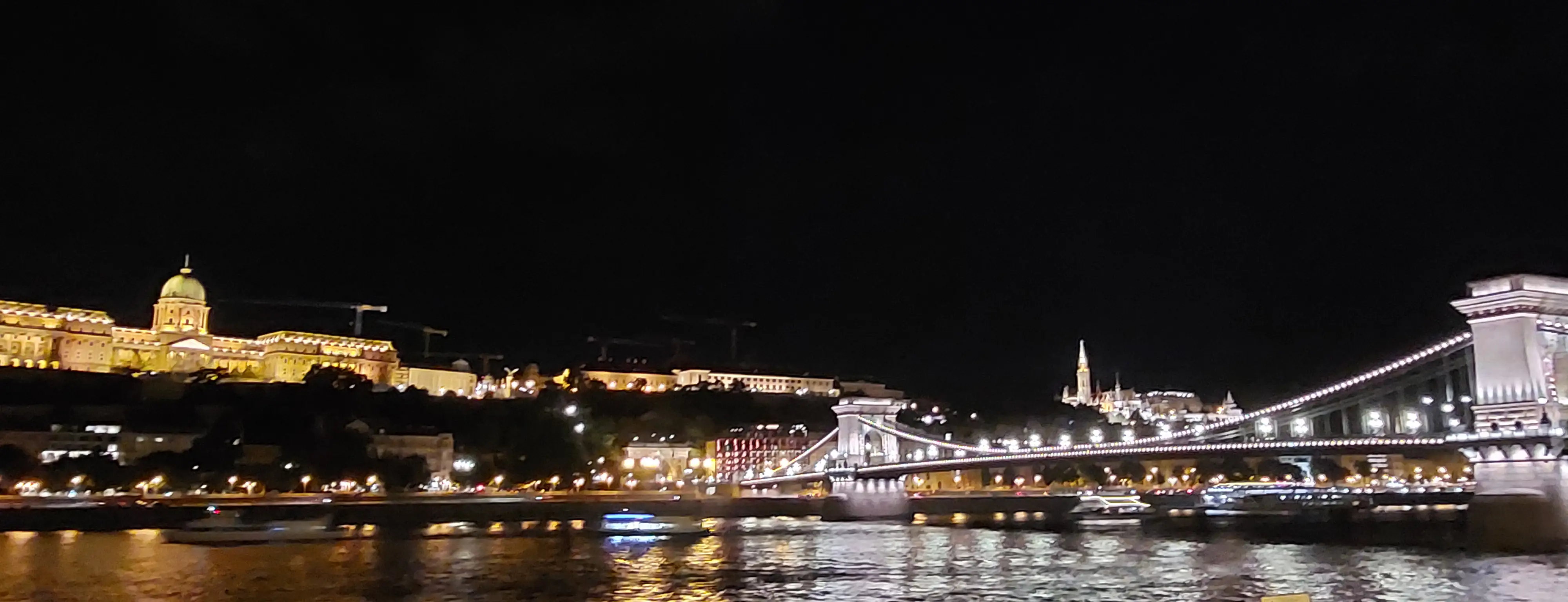
It is almost as if you have been transported somewhere else without actually moving.
The history becomes more visible. The river becomes darker. The lights become brighter. The architecture becomes almost theatrical, but without losing its warmth. And somewhere between the lights, the water and the people around you, the ordinary tourist evening gives way to something much more personal.
This, for me, is the magic of Budapest.
Experiencing Budapest’s Magic on a Danube Cruise
If there is one experience I would strongly recommend, it is a Danube cruise in the evening. There are different kinds of cruises depending on what you are looking for. Some are simple sightseeing trips, while others include dinner, live music and entertainment. I chose an evening experience, and it was one of the most memorable parts of the trip.
Being able to step out onto the deck, feel the air and the breeze from the water, and see Budapest from the river is completely different from seeing the city from the streets.
Some boats offer dinner and live entertainment, including Hungarian music and dancing. Others are more relaxed and focus mainly on the views.
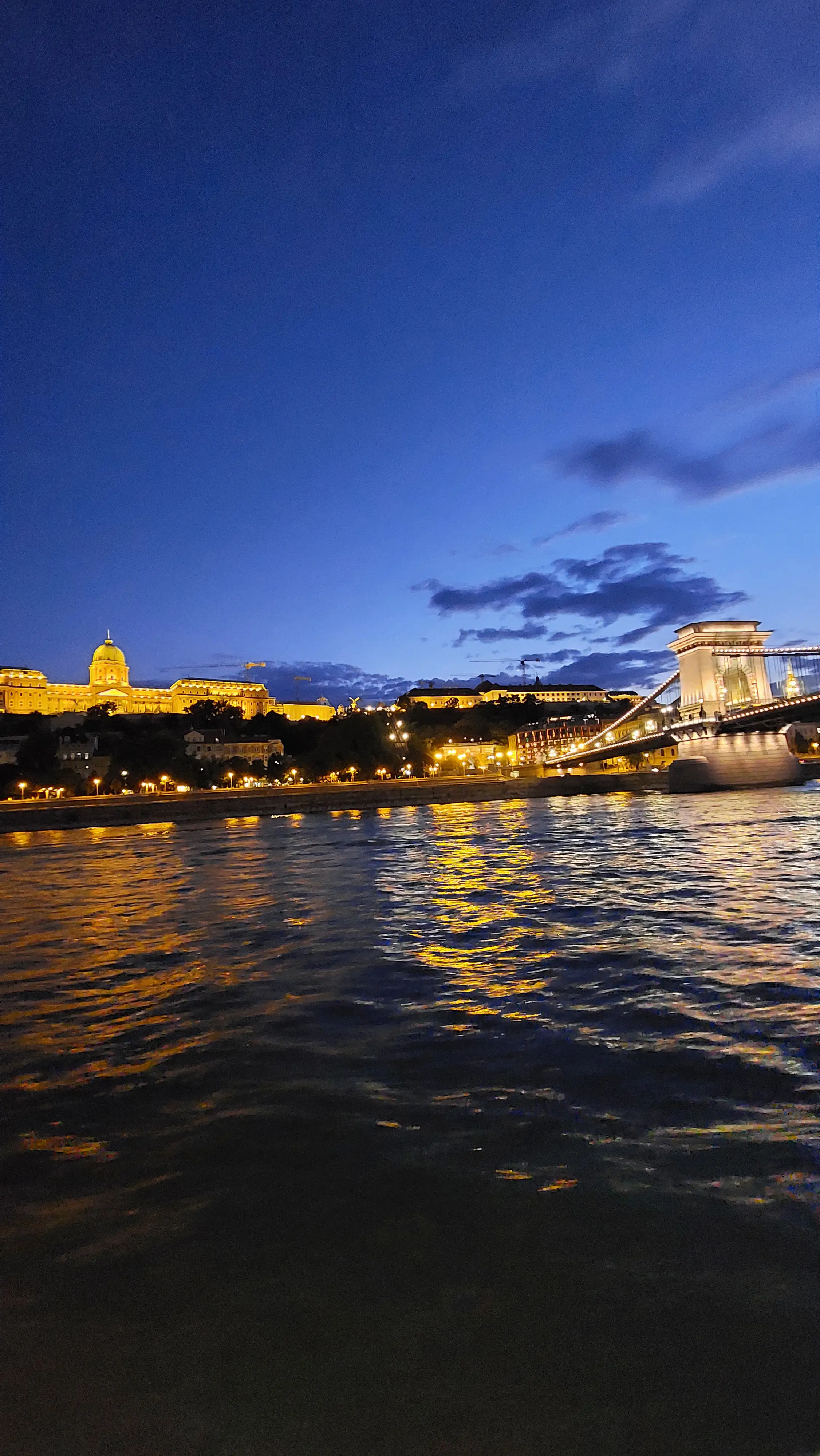
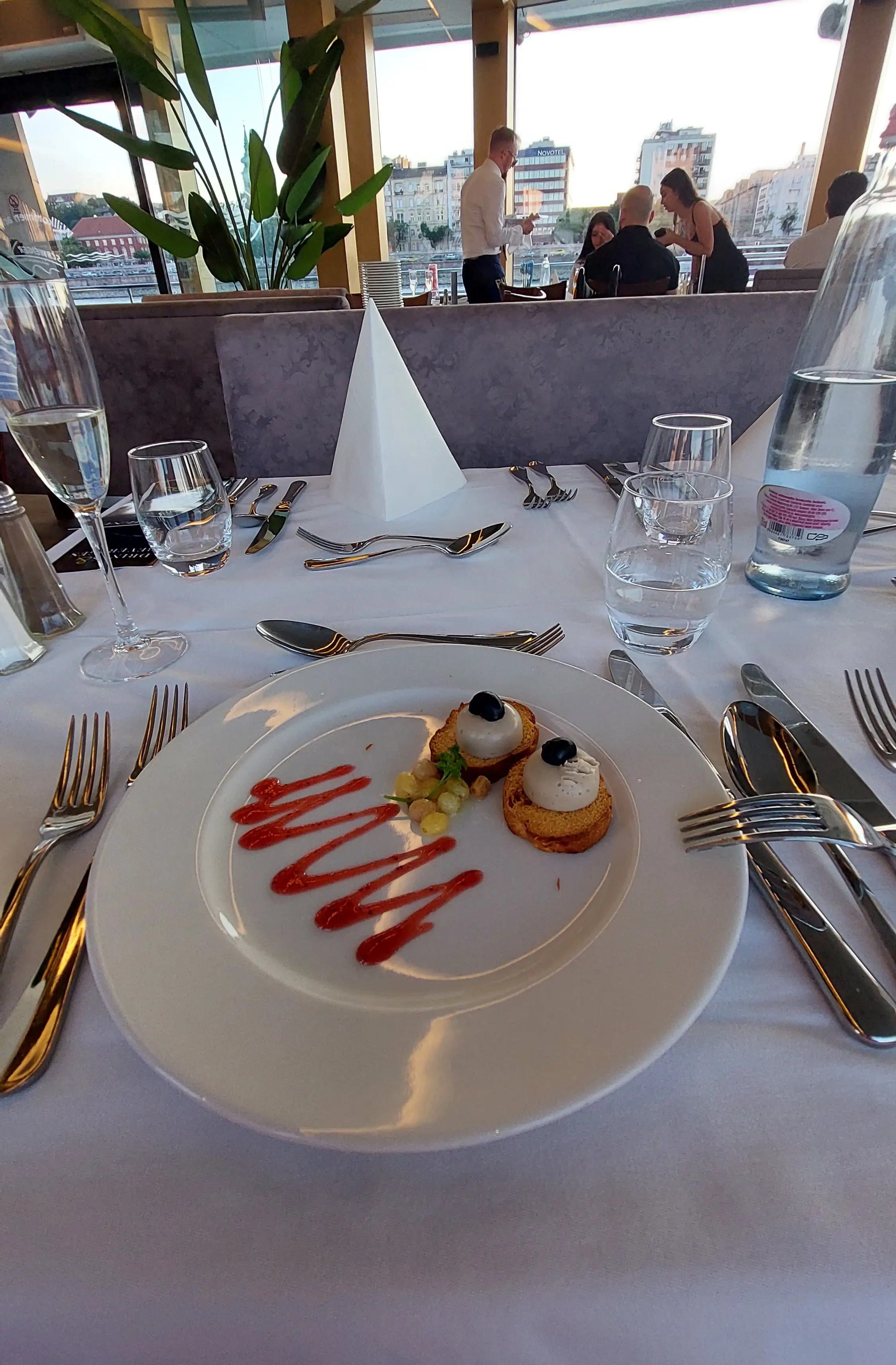
Of course, a boat trip also has an environmental footprint. If you want to include your cruise when thinking about the emissions of your trip, you can use the Offset Calculator to calculate and offset them.
During summer, Budapest also receives many river cruise ships carrying visitors who spend only a night or two in the city as part of longer European itineraries. This adds another layer to the already international atmosphere of Budapest.
On my cruise, I happened to sit surrounded by Americans. By coincidence, I was even wearing a T-shirt connected with the U.S. Capitol, which immediately gave us something to talk about.
It was one of those completely unplanned travel moments that you could never put into an itinerary.
The Conversations You Carry Home
Some of my favourite memories from Budapest did not happen at the major landmarks.
They happened on benches. There are plenty of places along the river where people simply sit down to rest after a long walk. Sometimes someone asks whether they can sit beside you, and a five-minute conversation turns into half an hour.
I met people from China, the USA, Romania, the UK, Ukraine and other parts of the world. And because people who travel tend to be curious about other places, conversations often moved naturally from Budapest to other countries, journeys, favourite destinations and the places we still wanted to see.
One of those conversations was with a Ukrainian woman beside the Danube. We talked about the places we had visited, life in different parts of the world, and eventually about Ukraine. From there, our conversation turned to the war and to the very different reality she would return to after her time in Budapest.
She told me that she had moved from another city in Ukraine to Kyiv at a time when the city was still relatively calm. Since then, things had changed. Even there, life had become increasingly difficult, with air-raid sirens sometimes sounding seven times a day and civilians losing their lives in attacks.
When we said goodbye, she gave me a wish I had never heard before. “I wish you clear skies.” I have wished people good health many times. We all do. Being alive and healthy is one of the most important things we can wish for another person. But I had never thought about wishing someone a clear sky.
Coming from someone who was about to return to a country at war, those words suddenly felt much more powerful. She told me that war makes you understand how important it is simply to have a clear sky above your head, without fear of what might come from it.
Then she shared something her grandmother had taught her: “It is not enough for the sky above us to be clear. We also need the sky inside our minds to be clear of bad thoughts”.
I will probably remember those words forever.
And whenever I think about Budapest, I think about that conversation too.
Because sometimes travelling gives you something much more valuable than another experience or photograph.
It gives you a wish you carry home.
Where Contrasts Come Together
Perhaps the best way I can describe Budapest is as a city of contrasts that somehow never feel contradictory.
It is a meeting point between East and West.
It is both old and new.
It is familiar and completely unfamiliar.
It is crowded and peaceful.
It is energetic and quiet.
It is full of tourists, yet it gives you space to disappear for a while.
There are lively evenings and incredibly quiet mornings. There is music, dancing and laughter by the river, and there are benches where you can sit alone and watch the water. There is the grandeur of the Parliament and the intimacy of a small café. There is history everywhere, but there is also a youthful energy that makes the city feel very much alive.

And perhaps this is what I found most beautiful about it. Budapest does not seem to have chosen between its different identities. It has kept them.
The boundaries are visible, but they overlap. The differences remain, but they coexist. The past has not completely given way to the present; instead, the two seem to have found a way to live together.
That is also what makes the city feel so romantic.
It leaves room for dreams.
Budapest: Where Dreams Meet Reality
Budapest stayed with me as a city between two worlds, where differences remain visible but somehow become part of the same picture.
A city of movement and stillness.
Of crowds and solitude.
Of busy tourist streets and unexpected human connection.
Of quiet mornings and evenings filled with light, music, passion and romance.
Of people who want you to feel welcome, comfortable and looked after.
And perhaps this is what travel is ultimately about.
Not only seeing a new place, but allowing it to give you something you did not know you were looking for.
Some dreams come true.
Some do not.
Some plans never find their way into reality. Some expectations change when we finally arrive. Some dreams remain dreams.
And yet, for a few days, you can step outside your ordinary life. You can breathe. You can meet strangers, listen to their stories, sit beside a river and watch the lights come on.
And then, eventually, you return home.
Back to your routine.
Back to reality.
Back to life.
But perhaps you return just a little differently.
And whenever I think of Budapest, I think of the Danube at night, the quiet morning streets, the lights of the Parliament, the people dancing beside the river, the thermal waters, the unexpected conversations — and one particular goodbye (or maybe two).
Clear skies.
Above us.
And inside us.
Goodbye, Budapest.
Goodbye, magic.
Goodbye, romance.
Goodbye, my friend.
Sometimes we travel to escape life. But some trips bring us back to life.
P.S. If only reality and dreams could coexist in the same harmony as the old and new in Budapest…