
Aksyt Ammat: How Sustainable Tourism Strengthens Rural Communities in Finland’s Lakeland
How Your Journey Through Finland’s Lakeland Supports Local Life, Culture, And Rural Resilience
This article explores how choosing to travel with Aksyt Ammat — a sustainable tour operator based in North Karelia, Finland — directly supports rural communities across one of Europe’s most lake-dense and culturally rich regions. In a country where vast forests, remote villages, and long winter seasons shape everyday life, tourism can play a meaningful role in sustaining local economies, preserving cultural traditions, and keeping rural areas alive.
Through small-group and tailor-made journeys, Aksyt Ammat connects travelers with local guides, family-run accommodations, and authentic Finnish experiences rooted in nature, heritage, and slow travel principles.
Each trip is still a holiday — but it also quietly helps keep small villages going.
Author: George Brown
In collaboration with: Äksyt Ämmät
Life in Finland’s Lakeland
Finland’s Lakeland region stretches across thousands of lakes, dense forests, and quiet rural communities. It is a landscape defined not by speed, but by stillness — where nature shapes daily life and communities are often small, spread out, and deeply connected to their environment.
Sometimes this means a village where the post office, café, and local shop are all the same building in winter — and no one finds that unusual.


In places like North Karelia, tourism isn’t just another industry — for many small businesses, it’s what keeps things running at all.
Aksyt Ammat works within this delicate balance, creating travel experiences that bring visitors into these landscapes in a way that respects both nature and the people who live there. Here, travel doesn’t feel like “consumption” at all. It just feels like being there.
The Landscape of North Karelia and Finland’s Rural Identity
North Karelia is one of Finland’s most distinctive regions, defined by vast forests, thousands of interconnected lakes, and sparsely populated rural communities. The region lies close to the eastern border and has historically developed a strong cultural identity shaped by nature, resilience, and seasonal living.
There are no large resort zones here, and that’s not an accident — it’s just not how the region has ever developed. Villages can be far apart here, sometimes just forests and lakes in between. This creates both a challenge and an opportunity — tourism must remain light, respectful, and deeply integrated with local life.


Aksyt Ammat operates within this reality, designing travel experiences that do not disrupt the landscape but instead move gently through it.
For travelers, it often feels less like “visiting Finland” and more like briefly stepping into how people already live here.
Tourism That Stays in the Community
Choosing Aksyt Ammat means your travel spend stays close to the place you are visiting.
Instead of large international chains or external operators, trips are built around:
— local guides and experts
— family-run guesthouses and rural accommodations
— regional food producers and restaurants
— small community-based service providers


In practice, this might mean staying in a guesthouse where the owner also prepares breakfast, cleans the rooms, and tells you where to walk in the forest nearby.
It’s a simple chain: you stay somewhere, and that stay directly pays someone who actually lives there.
It helps small guesthouses survive the long winter months in North Karelia and Lakeland, when there are far fewer visitors and income can be uncertain.
Unlike mass tourism, nothing really “disappears” into a system here — the impact stays in the same place you experienced it.
How Local Accommodation Shapes Rural Survival
Accommodation is one of the most important drivers of rural economic sustainability in Finland. In regions like Lakeland, where population density is low and seasonal variation is high, small guesthouses and family-run lodges play a critical role in maintaining local livelihoods.
Unlike large hotel chains that centralize revenue, these smaller establishments distribute income directly into the community. They often employ local residents, source food locally, and maintain traditional building styles and hospitality practices.
Through its partnerships with these accommodations, Aksyt Ammat ensures that tourism revenue circulates within rural ecosystems rather than leaving the region. This creates a more resilient local economy — one that is less dependent on external industries and more connected to place-based sustainability.
Cultural Heritage and Everyday Life in Rural Finland
Beyond nature, Aksyt Ammat also helps keep Finland’s rural cultural life visible and alive.


Travelers may encounter:
— traditional Karelian food culture
— local storytelling and heritage traditions
— seasonal rural activities shaped by long winters and bright summers
— community-based events in small villages
These aren’t performances — and locals would probably find it strange if they were treated like ones. They are part of everyday life in the region — shared in a way that respects authenticity and local participation.
This helps ensure that cultural knowledge is not lost, but passed on through meaningful exchange between residents and visitors.
You might end up eating Karelian pastries in a kitchen where the same recipe has been made for decades, not because it’s traditional for tourists, but because it’s just Tuesday.
Seasonal Living and Cultural Rhythm in Rural Finland
In Lakeland, the seasons don’t just change the weather — they change how people live. Long winters bring snow-covered forests, frozen lakes, and quiet landscapes where movement slows down naturally. Summers, on the other hand, bring light that barely fades, turning the region into a vibrant space of outdoor activity and social gatherings.
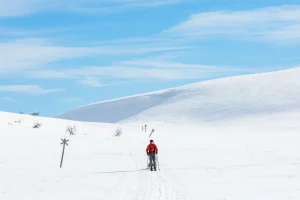
These seasonal shifts shape everything — what people eat, how they move, and how communities gather. In winter, activities revolve around snow travel, saunas, and indoor cultural gatherings. In summer, lakes become central to life, with swimming, boating, and forest exploration. Winter here is not a “seasonal attraction”. It’s just life with snow in it.

Travelers who visit through Aksyt Ammat are not just observing this rhythm — they become part of it. Experiences are structured to align with the natural flow of the year, allowing visitors to understand Finland as a living seasonal system rather than a static destination.
Supporting a Living Rural Economy
Many rural parts of Finland are slowly shrinking, as younger people move toward cities for work and services.
Tourism, when designed responsibly, can help reverse some of these pressures.
Through its model, Aksyt Ammat supports:
— local employment in tourism and hospitality
— diversification of rural income sources
— sustainable use of natural areas
— preservation of small village infrastructure
Each journey adds a bit of stability to rural areas that don’t get many visitors in the first place. It’s tourism that doesn’t try to scale fast — it tries to stay useful.
Why Small-Group Travel Matters in Fragile Rural Regions
One of the most important principles in sustainable tourism is scale. In fragile rural regions like North Karelia, the size and structure of tourism groups can significantly influence environmental and social impact.
There’s also a very practical side to this: many of these places simply couldn’t handle large groups even if they wanted to. Large groups tend to put pressure on small places — not just environmentally, but socially too. In contrast, small-group and tailor-made travel allows for better integration into local communities.
Aksyt Ammat follows this model by limiting group sizes and focusing on personalized itineraries. This ensures that each visit remains manageable for local hosts while preserving the quality of interaction between travelers and residents.
With smaller groups, things slow down enough that people actually talk to each other instead of just moving through the itinerary.
The Role of Slow Travel
At its core, Aksyt Ammat is really about slowing things down enough that you notice where you are.
Instead of rushing from attraction to attraction, travelers are encouraged to:
— stay longer in fewer places
— engage with local communities
— experience nature through walking, cycling, and outdoor immersion
— understand seasonal rhythms of Finnish life
This approach reduces environmental pressure while increasing the quality and meaning of each experience.
Slow travel here is less a concept and more a practical way of not rushing through a place that isn’t built for rushing. Tourism here doesn’t really scale like in most European destinations — and that’s exactly the point.
View This Tour Operator
Äksyt Ämmät