Climate Change Is Transforming the Destinations We Love
Are Your Favourite Travel Destinations Slowly Disappearing?
Think about your favourite place you’ve ever visited. Maybe it’s a tropical island, a snowy mountain resort, or a colourful coral reef full of marine life. Climate change is already changing many of the places we love to visit. Rising temperatures, stronger storms, and sea level rise are affecting destinations around the world. From tropical islands and coral reefs to ski resorts, forests, and wildlife habitats, the impacts are already being felt.
For travellers, this is more than an environmental issue. It reminds us that the places we love depend on a healthy planet.
In this article, we’ll explore how climate change is affecting some of the world’s most iconic travel destinations and what these changes mean for the future of travel. We’ll also share practical ways you can reduce your travel footprint and help protect the places that make our journeys so memorable.
Author: Emily Carter
In collaboration with: Sustainable Travel International
Islands and Coastal Destinations
Did you know that 80% of all global tourism takes place in coastal areas? These sun-drenched, sea-kissed destinations are not only among the most visited on earth — they are also among the most vulnerable to a changing climate.
Disappearing Beaches and Coastlines
As global temperatures rise, seawater expands and ice sheets melt, causing sea levels to increase at an accelerating rate. Combined with more frequent and intense storms, this is steadily eroding — and in some cases completely eliminating — some of the world’s most beautiful coastlines.
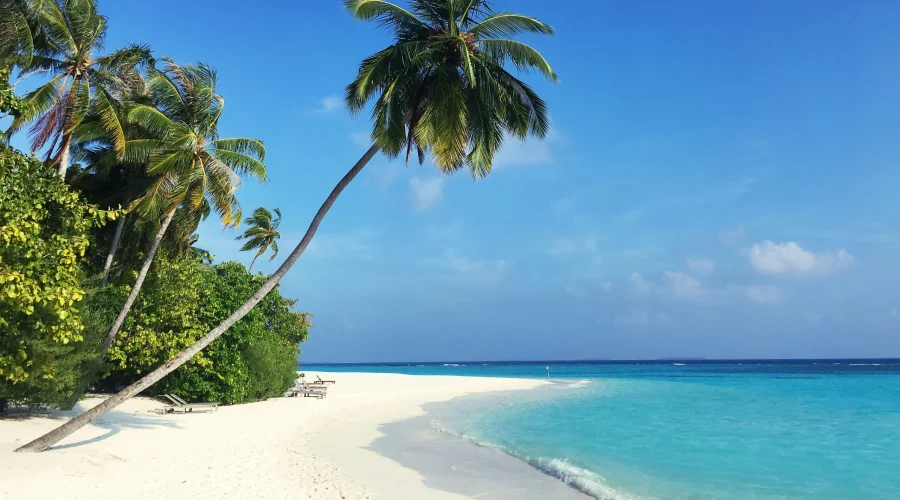
Destinations like St. Lucia and Mexico are already attempting to rebuild beaches lost to erosion. In the Caribbean, where a high percentage of tourism infrastructure sits just above sea level, a 1-metre rise in sea levels could damage or destroy 49–60% of the region’s resorts and 21 airports. According to a recent IPCC report, this scenario is a possibility by the end of this century.


For low-lying island nations like Tuvalu and the Maldives, the situation is even more urgent. Rising seas could swallow these destinations entirely — along with the communities and ecosystems that call them home.
Dying Coral Reefs
For many travellers, snorkelling or diving over a coral reef is a bucket-list experience. But these extraordinary underwater worlds are in serious trouble. As ocean temperatures rise, corals bleach — losing their colour and becoming more vulnerable to disease and death.
Severe coral bleaching is now happening five times more frequently than in previous decades. Since 2016, the Great Barrier Reef — one of the great natural wonders of the planet and a dream destination for millions of travellers — has experienced two massive bleaching events, killing roughly half of its shallow corals.
Though they cover less than 1% of the ocean floor, coral reefs support more than a quarter of all marine species. Without them, fish populations collapse, biodiversity shrinks, and the magic that draws divers and snorkellers from across the globe simply fades away.

Photo credit: Placebo365
Water Shortages
Rising temperatures and shifting rainfall patterns are making water scarcity a growing reality in destinations already prone to drought. Small islands, with their limited freshwater resources, are particularly at risk.
In much of the Caribbean, water shortages are already a way of life. Nations like Antigua and Barbuda, Barbados, and St. Kitts and Nevis have less than 600 cubic metres of freshwater per capita — compared to more than 1,500 cubic metres used annually per person in the United States. As climate change continues, competition for these resources will intensify, placing increasing pressure on local communities alongside the demands of the tourism industry.
Snow and Alpine Destinations
Not every traveller is drawn to the tropics. For many, the mountains — with their crisp air, dramatic landscapes, and snow-covered slopes — represent the ultimate escape. The global ski industry generates up to $70 billion every year. But rising temperatures are putting all of this at risk.
Snowfall in alpine regions is declining. Winter seasons are getting shorter. Many ski resorts are increasingly reliant on artificial snow-making machines just to stay open. If you’ve ever dreamed of a ski holiday in the Alps, the experience could look very different for future generations. Scientists predict that many alpine resorts could lose up to 70% of their natural snow cover by the end of the century.
The Alps — which attract 44% of all skiers worldwide — face particularly serious projections. Most of the ice there could be gone by 2100. And as glaciers retreat, the risks go beyond shorter ski seasons: alpine villages, tourism infrastructure, and visitors all face growing dangers from rockslides, avalanches, and landslides.
In the Southern Hemisphere, Patagonia’s iconic glaciers are also in retreat. Two enormous icebergs recently broke off Grey Glacier in Torres del Paine National Park — a landscape that draws travellers from across the world. The glacier is thinning at double the rate of a decade ago. If warming continues unchecked, this and many other Patagonian glaciers could look very different within our lifetimes.


Forests and Wildlife Tourism
For hikers, birdwatchers, and wildlife lovers, climate change is creating new challenges for many natural areas. Insect infestations and increasingly frequent, increasingly intense wildfires are threatening forest ecosystems. Smoke from fires can obscure scenic views and make outdoor activities dangerous — even in places that were once pristine natural retreats.
As climate change outpaces the ability of species to adapt, animals are migrating toward cooler climates. Some, like walruses and polar bears, face futures that are deeply uncertain. The wildlife and natural beauty that make these places so special are changing, and in some cases disappearing altogether.
What You Can Do: Travel With Purpose
Understanding what is happening to the places we love can be unsettling. But every traveller has the power to make a difference through the choices they make.
Here are a few ways to get started:
1. Calculate and offset your travel emissions. Use our Carbon Offset Calculator to understand the footprint of your flights, cruises, and stays, then support verified climate projects that help protect the destinations you love.
2. Choose verified eco-stays.
3. Pack lighter and reduce waste.
4. Support local communities.
5. Stay informed.
Explore with care. These places depend on it.