
Rewilding Travel in Europe: 4 Wild Places Where Nature is Making a Comeback
Places Where You Can Experience Nature’s Comeback Without Turning Wildlife Into a Spectacle
Rewilding travel in Europe is a form of wildlife tourism focused on experiencing ecosystems as they recover — through responsible bear watching, wolf tracking, wildlife safaris and conservation-led nature experiences. Across Europe, travelers can now encounter landscapes where species once pushed to the brink are returning.
In this article, you’ll discover what rewilding travel actually means, why it’s becoming one of Europe’s most magnetic eco adventure experiences, and exactly where to go to witness nature’s comeback firsthand. We’ll take you from the wolf-rich forests of Romania to the rewilding landscapes of Spain, from a silent hide overlooking bear country in the Carpathians to tracking paw prints with naturalists in the Apennine Mountains of Italy. And we’ll show you how to do it right — with respect, with wonder, and with the kind of awareness that turns a trip into something that stays with you long after you’ve returned home.
Author: Emily Carter
Rewilding Safaris in Europe: A Different Kind of Wild Encounter
There’s a moment — sitting in a wooden hide at dusk somewhere in the Carpathian foothills, the forest going dark around you, everything utterly quiet — when you stop thinking about your inbox, your plans, your life. A brown bear steps out from the treeline. No fence. No keeper. No safety distance measured in metres of glass and concrete. Just you, the darkening trees, and a wild animal going about its evening as if nothing else in the world exists.
That moment is what rewilding travel is.
Not a zoo. Not a theme park. Not a safari camp staffed by a hundred people and priced like a small mortgage. This is something rawer and more honest — and it’s happening right here in Europe, in landscapes that most of us have driven through on motorways and never once stopped to look at properly.
Rewilding, as a concept, is elegantly simple: at its heart, rewilding means restoring natural processes and giving ecosystems more space to function with less intensive human management, while adapting conservation action to local ecological and social conditions. Depending on the landscape, that can mean restoring natural water flows, allowing natural grazing and succession, reconnecting habitats, reducing intensive management, or supporting the return of missing species — and then allowing ecological processes to do more of the work. What happens, it turns out, is extraordinary. Wolves recolonise mountain valleys they haven’t touched in a century. Beavers return to rivers and, within a few seasons, transform them — slowing water flow, filtering pollution, creating wetlands that support dozens of species that had quietly vanished. Forests regenerate. Soil rebuilds. The whole intricate architecture of a functioning ecosystem reassembles itself, given half a chance.
Over the last decade, this has shifted from conservation theory to lived reality across the continent. Wolves have naturally recolonised large parts of Western and Central Europe, spreading through connected populations and dispersing across national borders into countries where they had been absent for generations. Beavers are back in British rivers. White storks nested in England for the first time since 1416. And in Spain, Przewalski’s horses — widely considered the world’s last truly wild horse — are now part of a pioneering rewilding effort in Spain’s Iberian Highlands. In December 2025, six horses were released inside Alto Tajo Natural Park, following earlier releases elsewhere in the wider rewilding landscape.
This is not just a conservation story. It is a travel story. And it’s one that every conscious traveller needs to know.
Romania: Bear Watching, Wolves, Lynx and European Bison
If there’s one country in Europe where the megafauna never really left, it’s Romania. While much of Western Europe spent centuries systematically eliminating its large predators — wolves, bears, lynx — the Carpathian Mountains held out. Romania has one of Europe’s largest brown bear populations. Estimates vary substantially depending on the method used, and a 2025 DNA-based assessment produced a significantly higher estimate than earlier counts. However, conservation experts have questioned the study’s methodology and called for greater transparency and independent review.
The Southern Carpathians, one of Rewilding Europe’s key landscapes, are a major focus of conservation and rewilding efforts in Romania. The approach to experiencing wildlife here is careful, patient, and deeply respectful — which is exactly what makes it unforgettable.
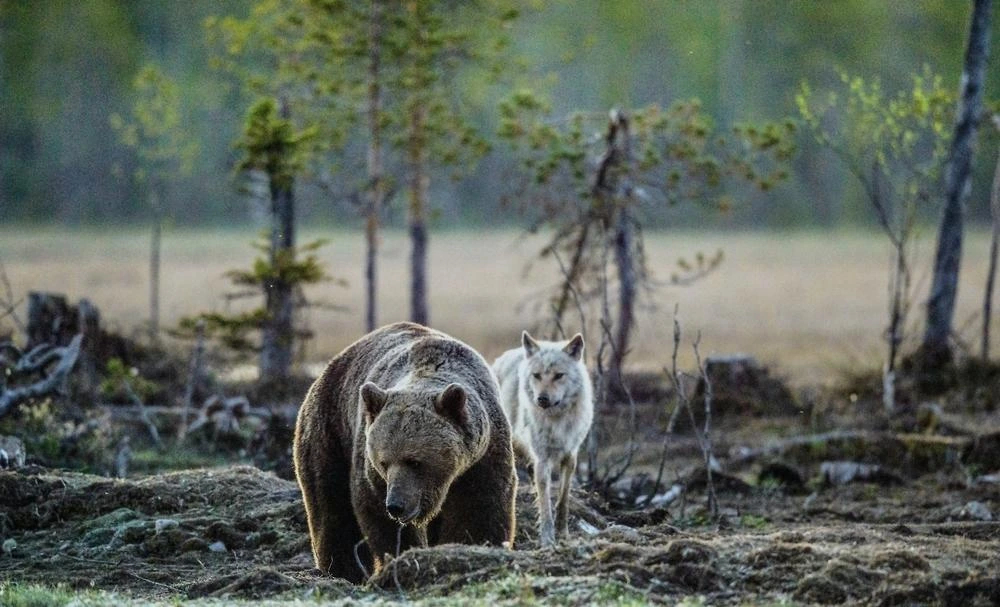
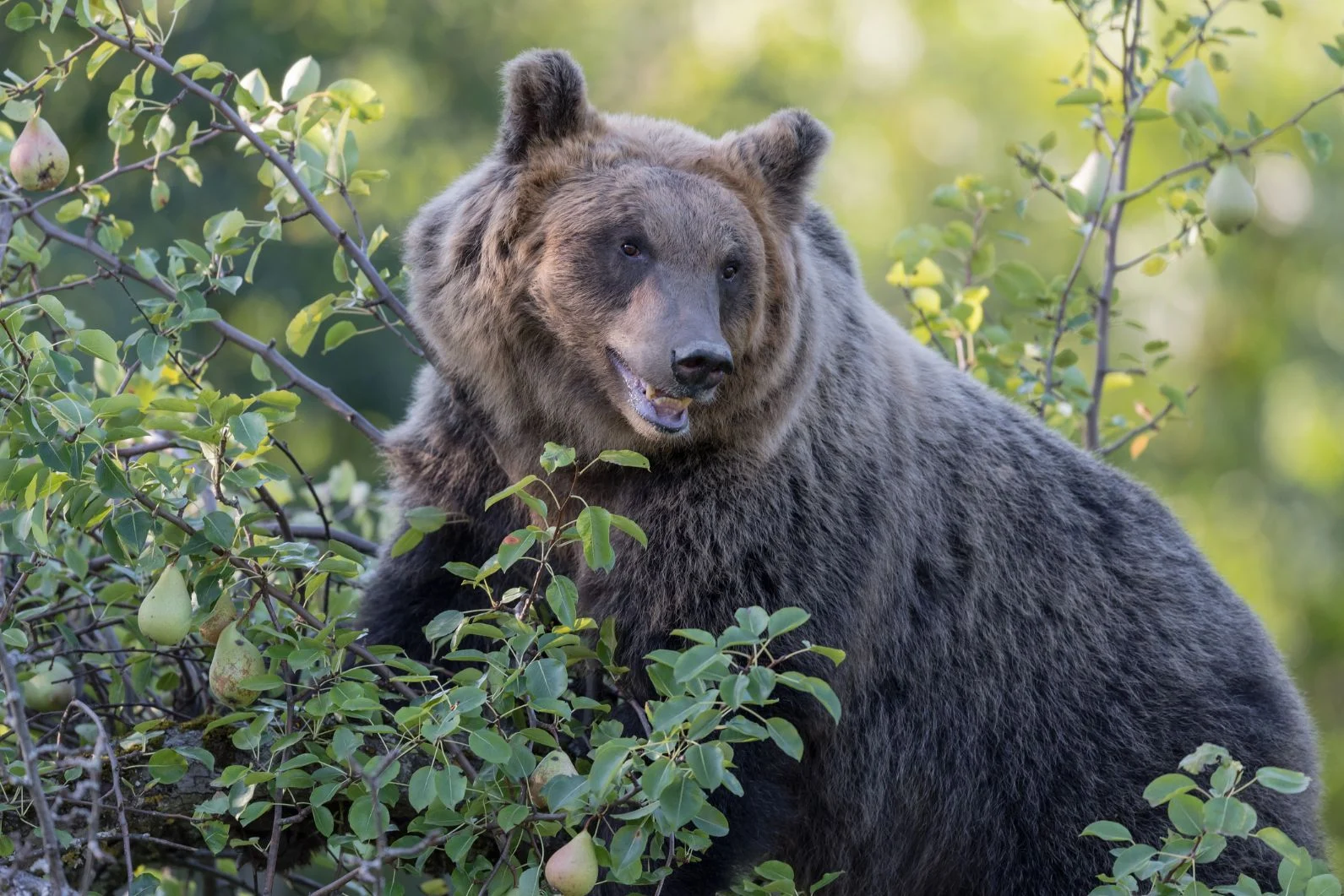
Guided bear-watching takes place from purpose-built hides positioned near forest clearings in the hills around Zarnesti, Sinaia, and Harghita. Responsible operators position hides carefully to minimise disturbance, often taking account of wind direction and natural wildlife movement, and then wait. You might sit for two hours without seeing anything. And then a brown bear steps into the clearing — and then another — and then two cubs wrestling while their mother watches calmly from the edge of the treeline — and you understand entirely why you sat quietly in the dark for two hours.
The distinction between responsible and irresponsible bear watching here is real and worth investigating. Ask operators whether they use bait, supplementary feeding or other methods to attract animals. If they do, understand exactly what is being used, how it affects wildlife behaviour, and whether the practice is legal and independently monitored. For travellers who want the least manipulated encounter, operators that observe wildlife without deliberately attracting it may be preferable.
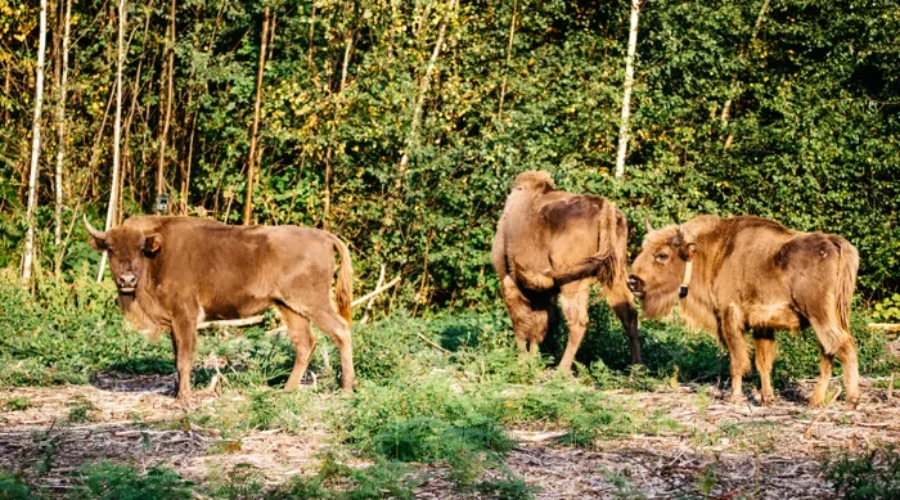
Bears aside, Romania’s rewilding landscape includes something even rarer: the European bison. The Southern Carpathians are now home to a growing free-roaming population of European bison. Based on a genetic study, the population was estimated at more than 200 animals by 2024, including calves born that year. Watching these enormous animals move through a beech forest is the kind of encounter that recalibrates your sense of scale.
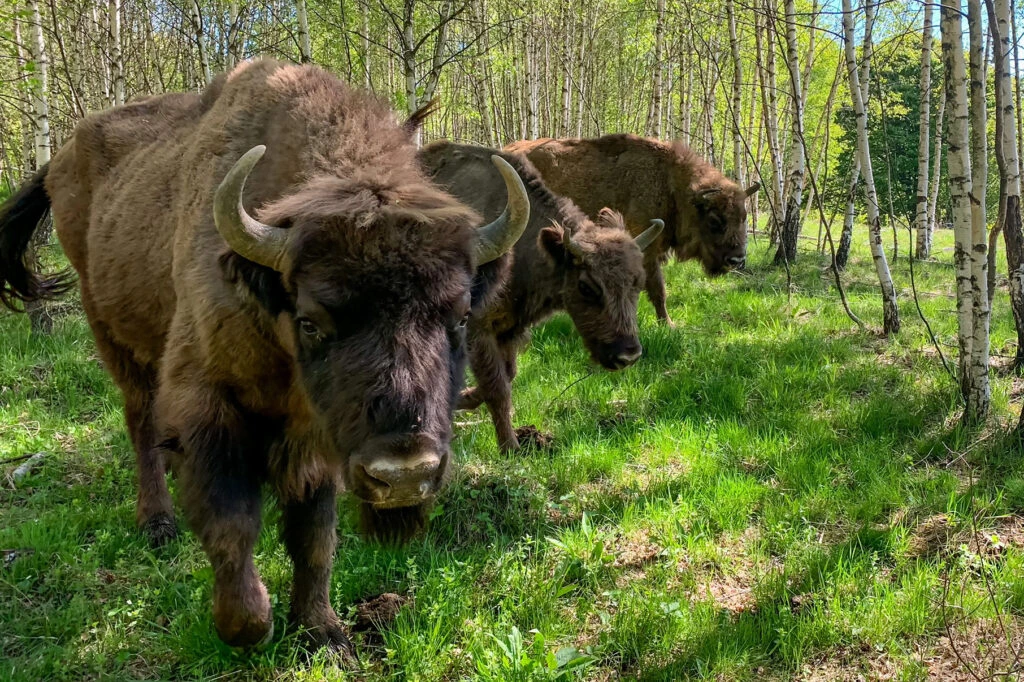
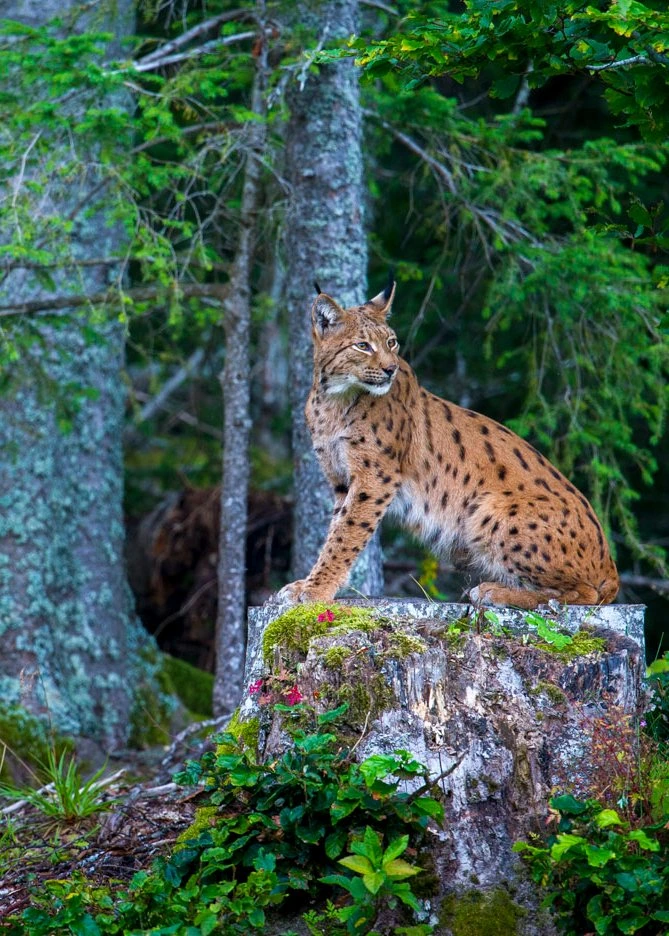
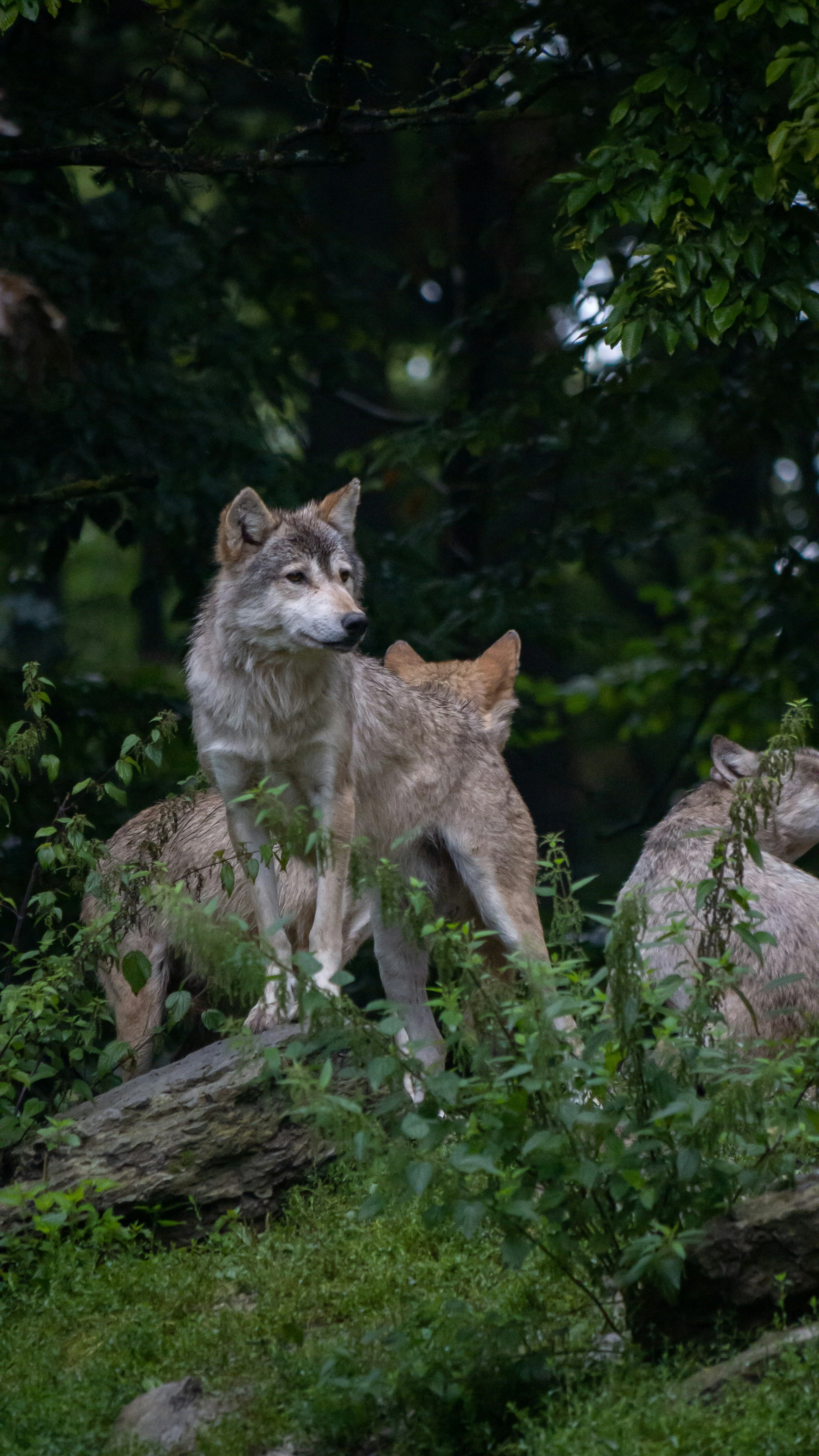
Wolf and lynx sightings are rarer — these are elusive animals with large territories — but tracking their signs with a local naturalist, reading the forest for prints and scrapes and the particular silence that tells you a predator has been here recently, is itself the adventure. Many local guides bring deep knowledge of the landscape and of the animals that have long shared it, while some have backgrounds in traditional rural livelihoods or wildlife management. Their knowledge is irreplaceable, and their livelihoods are directly sustained by the conscious travellers who choose to come.
Where to base yourself: The town of Zarnesti in Transylvania is the main gateway, with growing eco-lodge and guesthouse accommodation. Brasov, a 30-minute drive, is a beautiful medieval city if you want a mix of wild and civilised. The Hateg Country Dinosaurs UNESCO Geopark is also nearby — a deeply strange and wonderful extra dimension to any trip.
When to go: June to October for bears. January to March for wolf and lynx tracking, when snow makes prints visible and the forest is stripped of its summer camouflage.
Spain: Przewalski’s Horses, Wolves and a Landscape Coming Alive Again
Spain is not the first country that comes to mind when you say “rewilding safari”. The Iberian Highlands are a sparsely populated mountainous and upland region of central-eastern Spain, extending across parts of Castilla-La Mancha and Aragón.
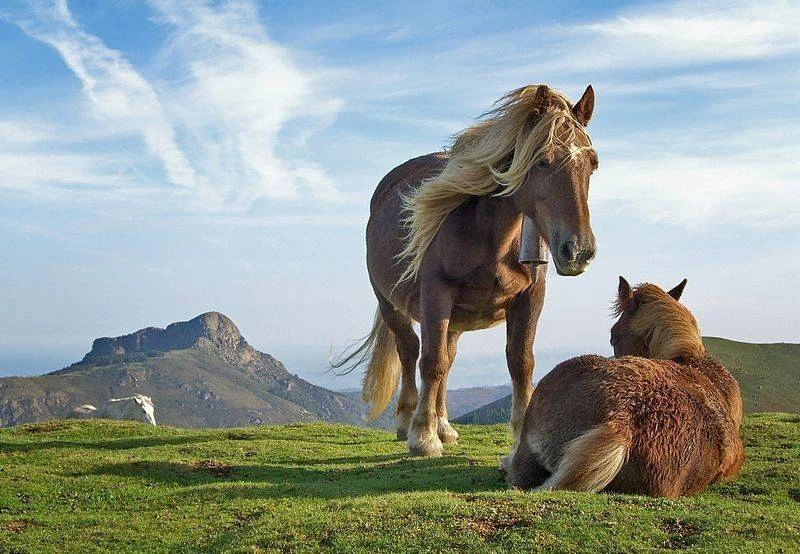
Rewilding Spain and Rewilding Europe have been working in partnership here for several years, and the results are already visible to anyone paying attention. Semi-wild tauros cattle — back-bred from domestic breeds to reconstruct the ecological function of the extinct wild aurochs — graze the scrubland. Red deer move through valley systems. And most dramatically: Przewalski’s horses now run free in the Alto Tajo Natural Park. Their grazing is intended to help reduce combustible vegetation, support biodiversity and contribute to broader wildfire-risk reduction.
These are not domestic horses simply returned to the landscape. Przewalski’s horses are genetically distinct from domestic horses and are widely regarded as the world’s last truly wild horse. In December 2025, a herd of six was introduced to the Alto Tajo Natural Park, marking the first natural-grazing project with these horses inside a protected area of the Iberian Highlands. Watching a small herd move across a Spanish ridgeline at sunrise, dust rising from their hooves, is one of those experiences that briefly makes the modern world feel very far away.
The rewilding safaris here are still emerging — this is not a polished, heavily commercialised experience, and that’s part of what makes it worth seeking out now, before it becomes one. Local nature-tourism guides take small groups to explore the landscape and observe its large herbivores, including Przewalski’s horses and tauros, as well as other wildlife such as red deer. Wolf sightings are much less predictable and should not be presented as a guaranteed feature of a visit.
The Iberian wolf, often classified as Canis lupus signatus, is a distinctive Iberian population of grey wolf whose taxonomy and status have been debated by scientists. Wolf encounters are far less predictable. Where wildlife tourism focuses on wolves, responsible operators should frame the experience around tracking, ecology and coexistence rather than promising sightings or treating the animals as a spectacle.
The community dimension here cannot be overstated. Rewilding initiatives in the Iberian Highlands are also linked to efforts to support rural economies in villages that have experienced long-term population decline as younger residents move to larger cities. Wildlife tourism is creating new income opportunities, although its long-term effect on rural depopulation remains an ongoing question. When tourism is genuinely connected to local livelihoods and conservation funding, a rewilding safari can become part of the economic argument for allowing wild nature to return.
Where to base yourself: The Serranía de Cuenca, in and around the wider Iberian Highlands region, has small family-run rural hotels and traditional farmhouses converted into guest accommodation. The dramatic river gorges here — completely unknown outside Spain — are reason enough to visit before you’ve even seen a horse.
When to go: May to October. Spring is extraordinary for wildflowers; late summer for best horse-watching conditions; autumn for rutting deer and golden light.
Italy: Wolf Tracking and the Rare Marsican Brown Bear
Here is a fact that will genuinely surprise you. You can fly into Rome, spend a day walking the Forum and drinking espresso in Trastevere, and within roughly two hours by car be in the Apennines, a landscape where wolves are an established part of the ecosystem. Not metaphorically. Literally.
The Apennine Mountains that run down the spine of Italy have been continuously inhabited by wolves since before the modern era — Italy never fully eliminated its large predators the way France or Germany did, partly because of terrain and partly because rural communities in the mountains simply co-existed with them, grudgingly, for centuries. That historical continuity matters enormously: Italy became one of the important source populations in Europe’s wider wolf recovery. The recovery of wolves in the Apennines became an important part of Europe’s wider wolf comeback, while wolves from different source populations have naturally dispersed across national borders and recolonised parts of Western and Central Europe.
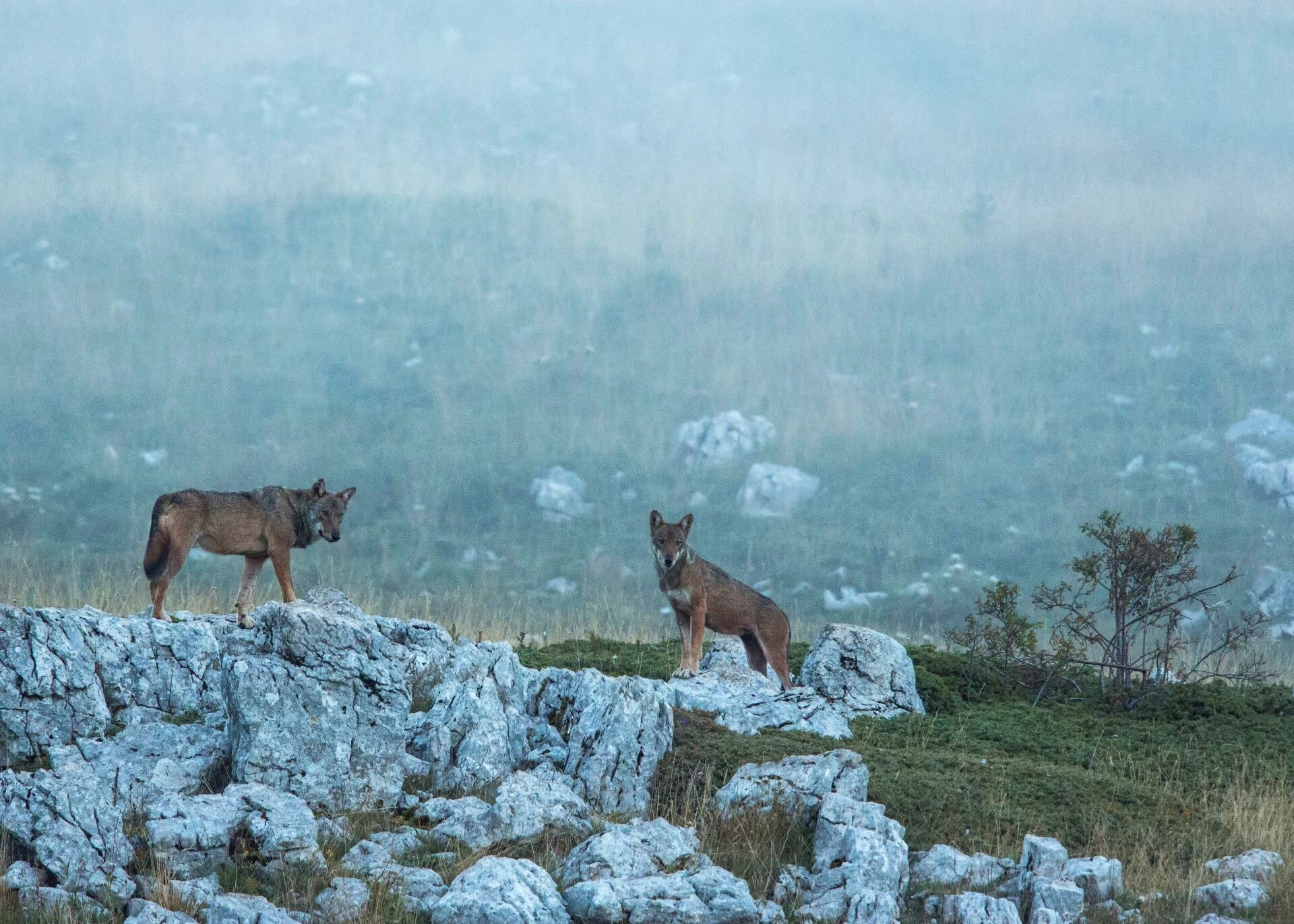
Abruzzo, Lazio and Molise National Park — inaugurated in 1922 and formally recognised by the Italian state in 1923 — is one of Italy’s oldest national parks and a stronghold of this recovery. It’s also home to something even rarer: the Marsican brown bear. This distinct population of brown bears is found nowhere else in the world and is critically endangered. A 2025 genetic estimate placed the population at around 81 bears across the Apennine range, although the estimate carries statistical uncertainty. Every sighting is extraordinary, and genetic monitoring gives researchers an unusually detailed picture of this exceptionally small population.
Responsible wildlife operators run multi-day wolf-tracking experiences in and around the park, led by naturalists who know the animals’ territories with the familiarity of neighbours. The programmes are not about guaranteed sightings — they can’t be, and any operator who promises them should be treated with suspicion. They are about learning to inhabit a landscape differently: to notice the compression of snow where something heavy walked in the night, to understand why the birds in one valley are silent while those in the next are not, to track a set of prints from a forest road down to a streambed and piece together what happened there at 3 a.m.
That kind of learning changes how you see every landscape you visit afterwards. That’s the deeper gift.
The town of Pescasseroli, inside the park boundaries, is a charming, quiet base with good local restaurants and small hotels that have been serving wildlife watchers for years. The park itself protects not just bears and wolves but golden eagles, peregrine falcons, Apennine chamois, and Italian deer — meaning that even on days when the apex predators prove elusive, the wildlife watching is rich.
Where to base yourself: Pescasseroli for the core national park experience. Scanno — a medieval hilltop town nearby — is one of the most beautiful villages in southern Italy and worth an evening.
When to go: Year-round, but October to April is prime for wolf tracking when leaf cover is down and fresh snow holds prints. Bears emerge from hibernation in March and April.
Knepp Estate: Britain’s Most Famous Rewilding Experiment
Not every rewilding destination involves dramatic predators or remote wilderness. Some of the most quietly extraordinary eco adventures are close, accessible, and quietly earthshaking in what they demonstrate about what’s possible.
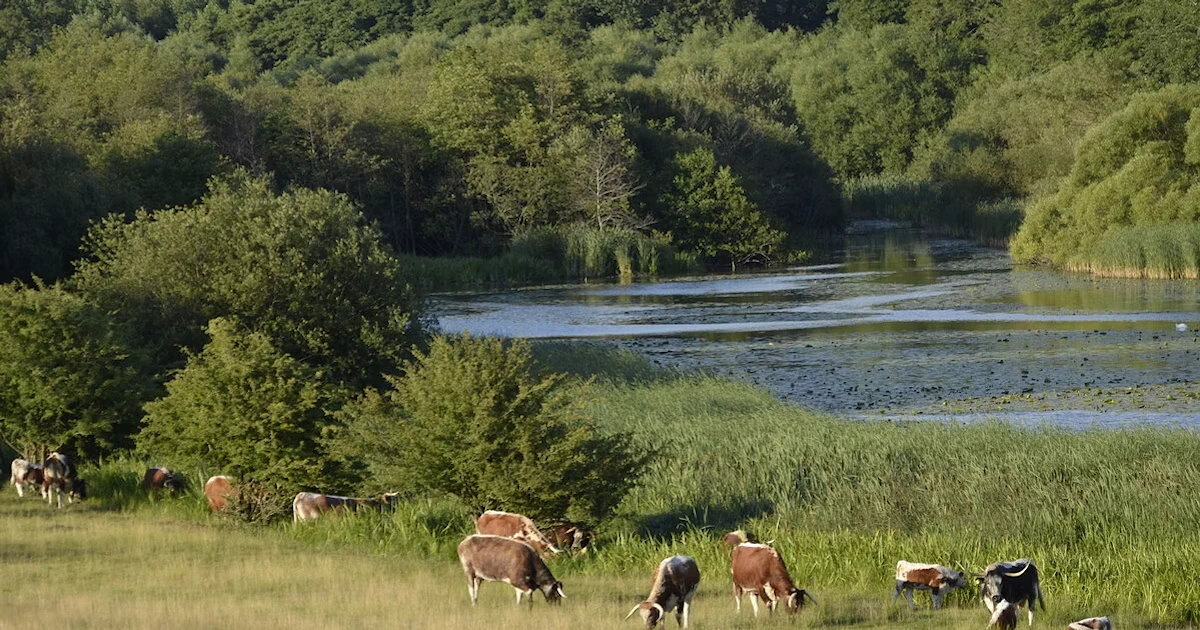
The Knepp Estate in West Sussex, England, covers about 3,500 acres of former intensively farmed land in the soft hills of southern England — not dramatic country by any measure. Twenty years ago, it was a struggling conventional farm, haemorrhaging money and producing food that barely justified the effort. Today, it’s a mosaic of scrub, wood pasture, and wetland that has become one of the best-known and most extensively studied rewilding projects in Britain, and home to wildlife that has vanished from most of the British countryside.
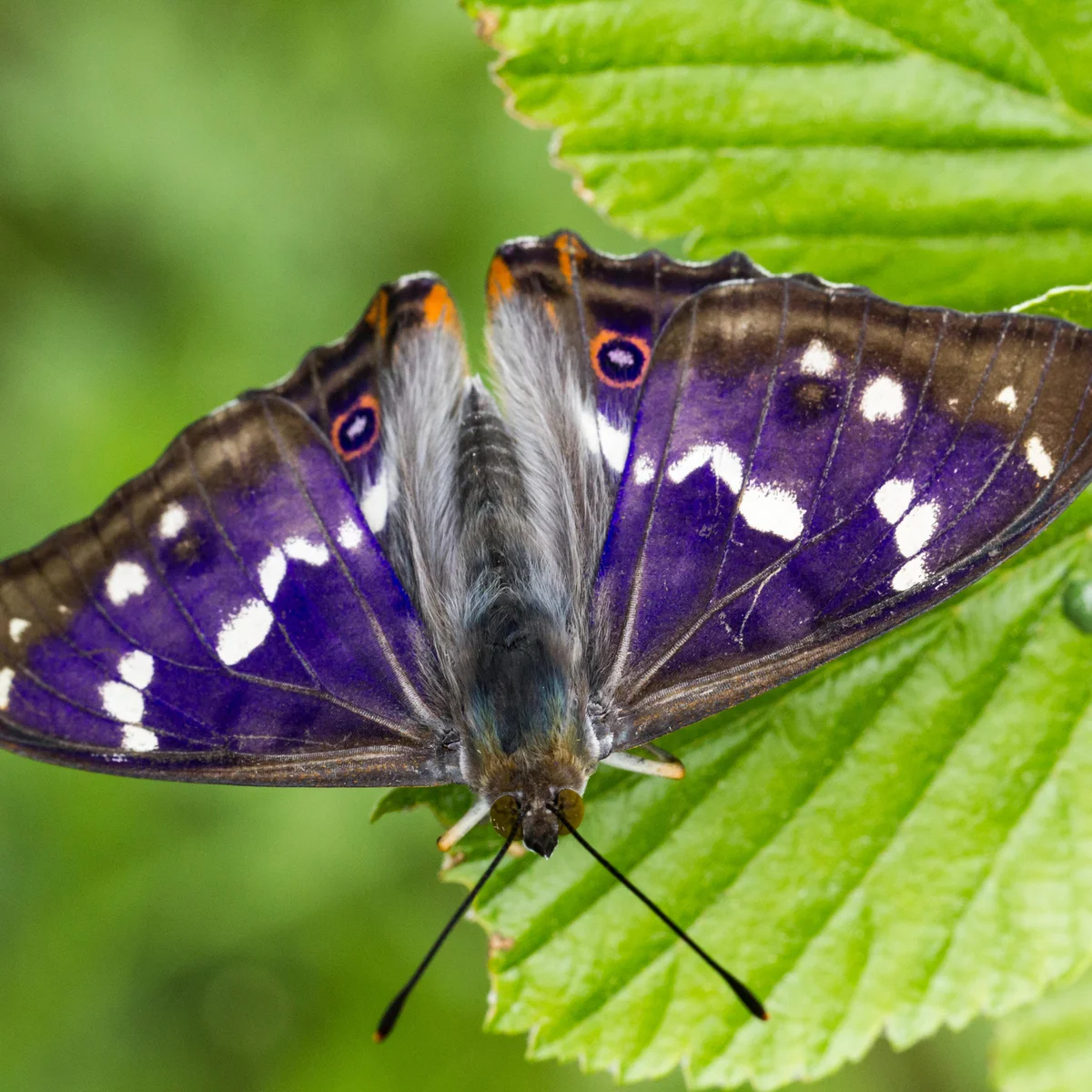
Knepp supports an impressive range of breeding owl species. The purple emperor butterfly — one of Britain’s most spectacular insects, once restricted to a handful of ancient woodland sites — has established one of its largest colonies here. Rare bats, water voles, turtle doves, whose UK population has declined by approximately 98% since the 1990s, nightingales, peregrine falcons, and — most remarkably — white storks began breeding again in England in 2020, after centuries without an English breeding record; the historic 1416 record was from Scotland.
Read that again: white storks successfully bred in England in 2020, after the last recorded successful breeding in Britain in 1416. That historic record was in Edinburgh, Scotland — meaning the Knepp chicks marked the first successful English breeding record in centuries. Six centuries after the last recorded successful breeding in Britain, the return of white storks to breed in England became one of the most visible symbols of the project’s wider ecological recovery.
Knepp runs safaris — actual open-top vehicle safaris with expert naturalists — across its rewilded land. They also offer glamping accommodation on the estate, so you wake to turtle doves outside your tent and spend evenings at a fire watching bats feed over the meadow. It’s accessible from London in 90 minutes. It costs nothing like an African safari. And it delivers something very similar in emotional weight — the vertiginous sense of encountering a world still capable of surprising you.
The owners, Charlie Burrell and Isabella Tree, have written about the experience in ways that have influenced conservation thinking globally. For many readers, Isabella Tree’s book Wilding has become one of the defining books associated with the modern rewilding movement. What Knepp demonstrates, above all, is that rewilding doesn’t have to be remote or extreme to be transformative.
Where to base yourself: Knepp’s own glamping is the obvious choice — the experience of waking inside the rewilded landscape itself is qualitatively different from arriving for a day visit. Nearby Horsham has good rail links from London.
When to go: May and June for turtle doves, nightingales, and purple emperors. August and September for bats and the particular golden quality of evening light over meadow.
How to Travel Responsibly Through Rewilded Landscapes
Rewilding travel, like all wildlife tourism, arrives with responsibilities. The experiences that matter most — the ones that do real conservation good rather than simply consuming a trend — share certain characteristics.
Choose operators genuinely linked to conservation. The best rewilding tours are run by people directly connected to the projects they showcase — naturalists, former rangers, community guides who have skin in the game. Ask how the operator contributes to the conservation area. If there’s no clear answer, look elsewhere.
Keep your distance, always. The thrill of watching a brown bear or a wild horse is precisely because they are wild and free. The moment wildlife feels pressured by proximity, you’ve crossed a line — and you’ve also made the landscape fractionally less wild for the next visitor. Follow your guide’s instructions without negotiation.
Spend locally. Accommodation, food, guiding and souvenirs — spending locally helps retain more of the economic value of tourism within the community. Over time, that can strengthen the case for conservation, especially when tourism revenue is transparently connected to local livelihoods and habitat protection. That economic evidence can help strengthen the case for conservation among landowners, municipalities and governments. Your choices have a vote.
Go slowly. Rewilding travel is not a checklist. The most meaningful experiences come from spending three or four days in one place, learning its rhythms, understanding what the landscape looked like before humans, and noticing how it’s changing. One afternoon gives you a glimpse. A week gives you something more like understanding.
Travel in small groups. Many responsible wildlife operators use small groups to reduce disturbance and improve the quality of the experience. Smaller groups cause less disturbance and almost always produce better, more genuine encounters. If you’re being offered a large-group package, ask why.
What Rewilding Travel Teaches You About the World
Here’s what nobody tells you about rewilding travel before you go: it is, unexpectedly, one of the most hopeful things you can do.
We live in a time saturated with environmental grief. The news is a relentless catalogue of losses — species declining, glaciers retreating, forests burning. And all of that is real, and serious, and not to be looked away from. But rewilding is the counter-story. It’s part of the evidence that when human pressure is reduced and ecological processes are restored, nature can sometimes recover in ways that still surprise the scientists studying it.
Wolves crossed back into Germany without human help — nobody carried them, nobody planned it, they simply walked when the conditions allowed. Beavers returned to Scottish rivers and began reshaping waterways by building dams and creating wetlands. In some locations, their activity can slow water flows and contribute to natural flood management, although the effects vary by landscape and can also create conflicts with landowners. At Knepp, white storks have successfully returned as a breeding species in England. The Carpathians still support one of Europe’s most important brown bear populations, and now we go there to sit in silence and watch them. When tourism revenue is transparently connected to local livelihoods and conservation, wildlife watching can help strengthen the economic case for protecting the forests that shelter the bears. It is a loop — but one that depends on how tourism is managed.
Rewilding travel puts you inside that loop. You become, briefly, part of the ecosystem rather than a tourist to it. Not a consumer of a landscape, but a witness to its recovery. And that shifts something — in the way you see land, in the way you understand what “wild” means, in the weight you give to the small decisions that accumulate into a way of living on the planet.
You come home not with a checked box but with a different kind of urgency. Not the anxious urgency of someone overwhelmed by everything that’s broken. The quieter, steadier urgency of someone who has seen — really seen — what the world can do when we get out of its way.
That’s worth more than any souvenir. And it’s what the best eco adventures, at their best, are for.